

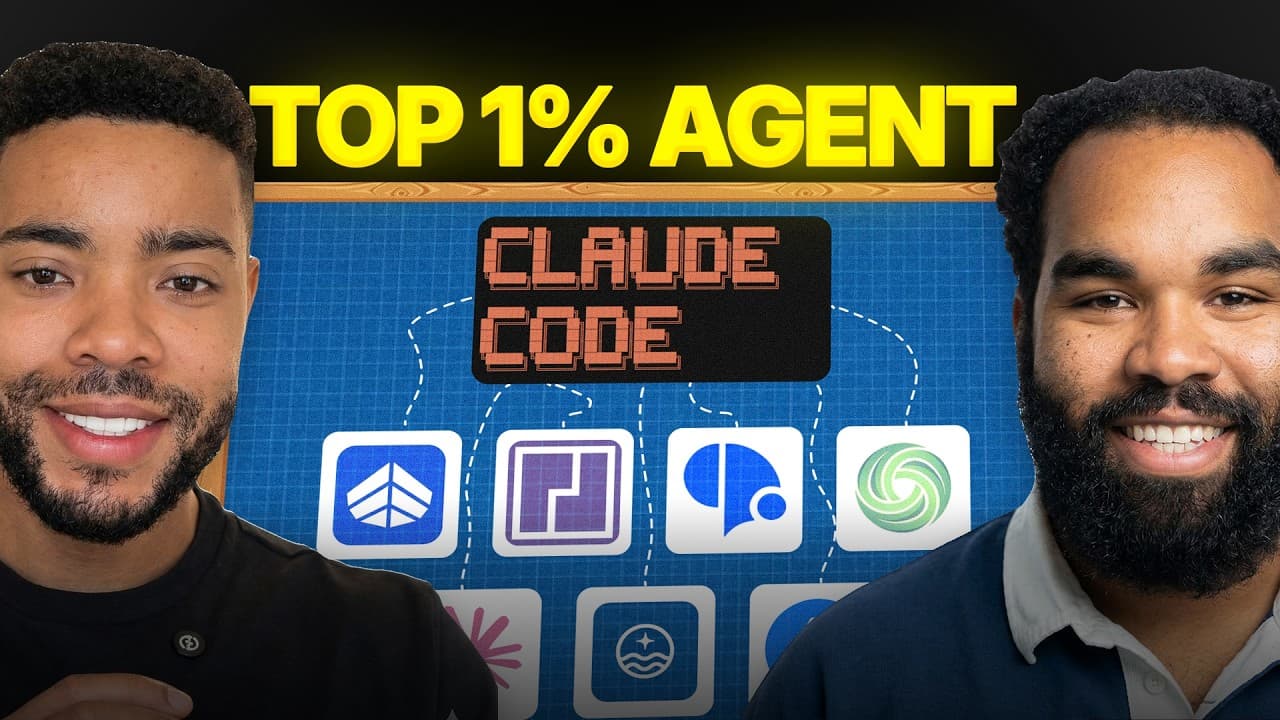
At ColdIQ, we run outbound campaigns for 70+ B2B clients and the entire execution layer now sits inside Claude Code.
Kenny Damian, on our team, built a full outbound campaign targeting 300 SaaS companies in under 20 minutes. He typed "find me software companies between 200 and 500 employees" into the terminal, and Claude Code handled every step that followed without a single dashboard open or CSV export in between.
The magic sits in the API stack behind the terminal. Six APIs, each one handling a specific part of the campaign, orchestrated through plain English.
Here is the exact stack and why each API earns its spot.
1. How Claude Code Runs an Outbound Campaign
Claude Code is an AI coding environment that runs in the terminal. You describe what you need in natural language, and it executes by reading the right APIs, pulling the data, and producing the output.
For outbound, this changes the work completely. Instead of logging into six platforms, exporting lists from each, cleaning spreadsheets, and uploading the final file to an email tool, you describe the campaign once. Claude Code handles every API call in sequence.
The stack runs like this: source companies, layer signals, find decision-makers, enrich contact data, fill gaps, launch the campaign. Each step maps to a specific API. Each API returns clean data that the next step consumes.
2. AI Ark: Sourcing Companies From a 70M+ Database
The first job is finding the right companies. AI Ark hosts a database of 70M+ companies with firmographic and technographic filters covering industry, employee count, revenue, location, and tech stack.
For the SaaS campaign, Kenny asked Claude Code to pull 300 SaaS companies between 200 and 500 employees. AI Ark returned the list in under 2 minutes.
AI Ark also supports lookalike search. Feed it your best customers, and it finds companies that match their firmographic and behavioural profile. This is the fastest way to clone accounts that already converted for you.
CompanyEnrich is another option at this layer. Its database covers 30M+ companies with similar filtering logic.
When you already have a list of your best customers, you can skip the manual filtering and pull lookalikes directly. We built a tool to do exactly that.
You can find companies similar to your best customers here, for free:
Lookalike Finder Tool
Fields marked with * are required
Quick examples:
3. PredictLeads: Layering Buying Signals
A company list without timing signals is just a list. PredictLeads fixes that by layering live buying signals on top of the companies you sourced.
PredictLeads tracks:
→ Hiring spikes by role and department
→ Tech stack changes (new tools added or removed)
→ Product launches
→ Press releases and funding announcements
On the SaaS campaign, PredictLeads flagged 186 of the 300 companies as actively hiring for sales and marketing roles. That immediately narrows the list to accounts with budget and urgency.
This is what separates modern outbound from mass blast campaigns. You stop emailing companies that are not ready. You focus on the ones actively building the team or the stack your product supports.
You can check which companies are actively showing buying signals in your space here, for free:
Intent Signals Tool
Fields marked with * are required
Quick examples:
4. BlitzAPI: Finding the Decision-Makers
A company list plus signals is still useless without the right contacts. BlitzAPI is the contact enrichment engine we use to map the buying committee inside each flagged account.
BlitzAPI uses an ICP waterfall to surface multiple contacts per account. You tell it the persona, seniority level, and department you want, and it returns Directors, VPs, and C-suite contacts across the list.
For the SaaS campaign, Kenny asked for Heads of Sales, VPs of Marketing, and Founders. BlitzAPI returned a clean list of decision-makers with verified titles across the 186 flagged companies.
LeadsFactory is a strong alternative here, especially when you need contacts at specific companies in real-time. Its API returns fresh contact data rather than pulling from a static snapshot.
5. Limadata: Filling Email Gaps
Any contact enrichment layer leaves gaps. Some contacts come back without a verified work email. The fix is running a second provider over the misses.
Limadata is the second email provider we run after BlitzAPI. Each contact finder has different strengths at scale, and stacking two covers more of the list than either one alone.
Prospeo works just as well in this position. Its V2 API covers 200M+ contacts and returns verified work emails with a clear success rate per lookup.
The principle is simple: coverage compounds when you run providers in a waterfall. The second tool catches what the first one missed, and neither of them eats the list on its own.
6. FullEnrich: Mobile Phone Numbers at 95% Match
For any campaign that uses phone outreach as a second channel, you need mobile numbers. FullEnrich cascades through 20+ data providers in a single API call.
On the SaaS campaign, FullEnrich returned mobile numbers for 95% of the contacts found. That is a match rate other phone databases cannot touch with a single provider.
The waterfall logic inside FullEnrich means you pay once and get coverage across providers that would otherwise require separate subscriptions. Claude Code hits the API, FullEnrich runs the cascade, and mobile numbers land in the final list.
You can find direct phone numbers for your target accounts here, for free:
Mobile Finder Tool
FIND PEOPLE
Type domains, select personas, fetch real contacts.
Paste a LinkedIn company URL or company domain and press Enter
Persona 1
Define specific job titles to target the right decision makers
7. Instantly.ai: Launching the Campaign
With the list assembled, Instantly takes over. Its API creates the campaign, pushes the leads, configures sending settings, and drops the campaign into draft mode ready for review.
Kenny's prompt covered everything: create a new campaign, push the 300 leads, enable plain text only, disable HTML, set proper wait times between sends, optimize for deliverability. The Instantly API handled every setting through the request.
Draft mode matters. You review the campaign before activating, which prevents accidental sends to the wrong list or with the wrong variables. Claude Code writes the API call, Instantly creates the draft, you give the final green light.
For multichannel outreach across email and LinkedIn, lemlist has strong API endpoints that follow the same pattern.
8. The Feedback Loop That Makes Outbound Self-Improving
After the campaign launches, Claude Code does not stop. It pulls reply data from Instantly, identifies which personas and company profiles responded, and builds lookalikes of those accounts.
That data feeds the next campaign. The list gets tighter each round because every batch teaches the system which profiles convert.
This is the closest thing to a retargeting pixel that exists for outbound. Your campaigns stop running cold the moment responder data comes in, and the signal quality compounds from one send to the next.
You can see how your GTM performance is converting across your funnel here, for free:
GTM Reports Tool
9. Conclusion
Six APIs. One natural language interface. A full outbound campaign built in under 20 minutes.
The advantage is not speed alone:
→ Consistency: every campaign runs the same QA steps
→ Coverage: each API stacks coverage the previous one missed
→ Compounding: reply data from one campaign feeds the next
→ Cost: one person runs what used to require a full outbound team
Kenny Damian ran the whole workflow from Claude Code with nothing but natural language prompts. The APIs did the heavy lifting.
If you are running outbound for a B2B company and still toggling between eight dashboards, the stack described above is worth the afternoon to set up.
---