Discover the best B2B sales tools in 2026. From prospecting to pipeline automation, this directory helps SaaS and enterprise teams find trusted software to accelerate revenue and close more deals.
Build your GTM stack from Claude Code
Call every data provider through one API - billed by credits, on the ColdIQ Marketplace.

ColdIQ is a unified API for 39 GTM data providers, enabling lead search, contact enrichment, and verified data delivery for revenue growth. It simplifies GTM workflows by automating data sourcing and integration into your CRM or sales tools.

folk CRM helps service businesses by automating busy work so they can concentrate on growth. It provides a single source of truth with a simple setup, proactive reminders, and team-selling features, allowing users to easily manage leads and prioritize tasks.

Instantly.ai helps agencies, sellers, freelancers, and teams scale their email outreach and improve lead intelligence. It achieves this by providing unlimited email account connections, deliverability optimization, AI-powered personalization, lead enrichment, and campaign pipeline analytics.

Prospeo helps sales professionals, recruiters, and marketers find verified email addresses and mobile numbers for outreach. It delivers this value by offering tools like an email finder, domain search, Sales Navigator export, mobile finder, email verifier, and a Chrome extension to locate contact information from various sources including LinkedIn and websites.

Artisan helps outbound sales teams automate manual tasks like prospecting with an AI BDR named Ava. It delivers value by providing access to a B2B database, identifying intent signals, and personalizing outreach through email and LinkedIn.
#1 Linkedin Automation Tool helps sales teams, recruiters, fundraising teams, and agencies automate LinkedIn outreach and engagement. It scrapes leads, personalizes messages, manages campaigns, sequences outreach via LinkedIn and email, and provides detailed analytics and reporting.

FullEnrich helps B2B sales and marketing teams find more emails and phone numbers for their prospects, aiming to increase pipeline and customer reach. It aggregates contact information from over 15 vendors, verifies email deliverability, and integrates with tools like LinkedIn, Sales Navigator, Zapier, and CRMs.

GetLeads gives your AI agent direct access to 402M+ verified B2B contacts through an MCP server. Search people in plain language, enrich emails and cellphones, pull the full LinkedIn profile per contact, and read funding and hiring signals. Flat monthly price, no credit caps, no per-seat billing.
.png)
Hypertide automates high-deliverability email infrastructure across Google, Microsoft, and Entra, enabling scalable outreach with seamless setup in 4-6 hours. Manage multiple inboxes, optimize deliverability, and integrate with major sending tools for just $50/month.

Apollo helps sales leaders, founders, account executives, marketers, sales development, and revenue operations to improve their sales processes and grow their businesses so they can meet their revenue goals. It delivers this value through AI-powered tools for finding leads, automating engagement, managing deals, analyzing performance, streamlining workflows, and providing coaching, all within a single integrated platform.

PredictLeads helps businesses identify growing companies and understand target prospects by providing company intelligence data. It delivers this value through APIs, flat files, and webhooks, offering structured data on company signals like job openings, news events, and technology adoption.

Adyntel provides instant access to competitor ads across Google, Meta, and LinkedIn. Estimate marketing budgets and analyze creatives with easy API integration

Openmart’s AI agents instantly surface, enrich, and deduplicate high-quality local-business leads tailored to your exact criteria. By automating research and enrichment, it slashes prospecting costs and turns data into a sustainable competitive edge.

Lima Data offers B2B data APIs for building prospecting, research, and email agents with verified contact data. It enables smarter outreach through real-time signals, enrichment, and flexible credits.
Compare the best SaaS and B2B sales automation tools in one place. Discover top sales platforms that help you automate prospecting, follow-ups, and reporting, so your team can focus on closing.
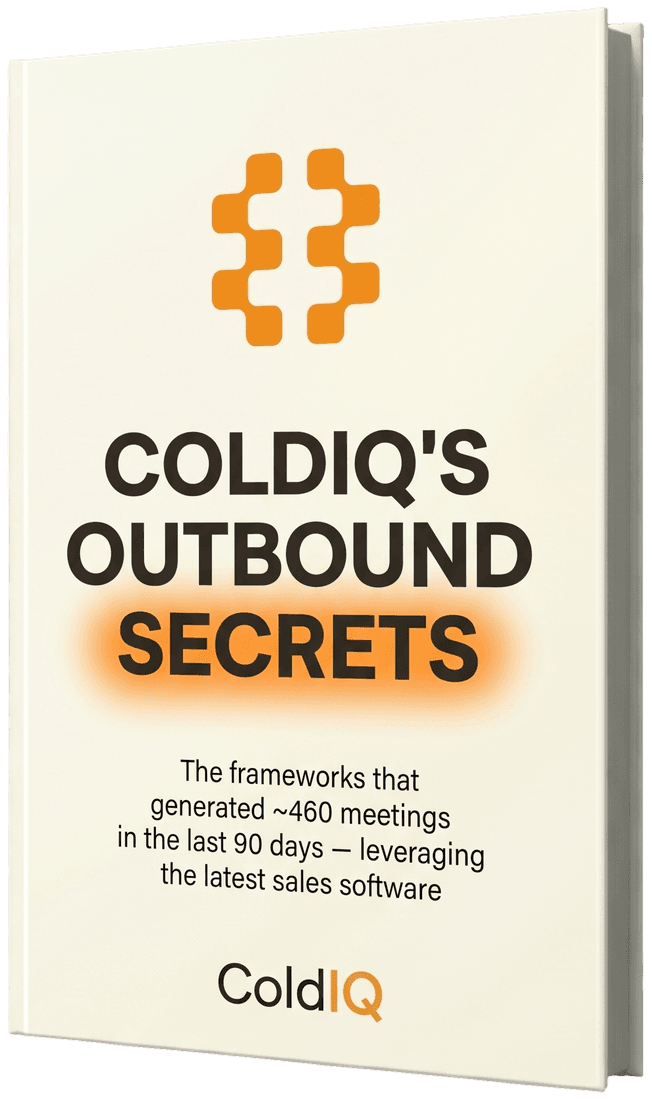
Get our latest sales tech discoveries, see how we leverage tools in real campaigns, and get the results for free.
Plus, receive a welcome gift: our guide to generating 460+ meetings!



























Last year, I hit a wall in my sales process. My CRM felt clunky, follow-ups were slipping, and I was spending more time managing tools than actually selling.
Out of frustration, I started testing new platforms.
Not the big, overhyped names, but small, smart tools that quietly made life easier. Within weeks, I was closing faster and tracking leads better than ever.
The truth? Some of the most powerful sales tools in 2025 aren't the ones trending on LinkedIn. They're the hidden gems flying under the radar.
In this article, I'll share the ones that gave me a real edge (and how you can use them too).
But we'll start with the foundations.
Think of sales tools as your behind-the-scenes teammates – digital helpers that make selling faster, smarter, and way less stressful.
At their core, sales tools are software or platforms that help you find leads, manage relationships, close deals, and track results. Their purpose is simple: save time and boost performance so you can focus on what really matters = selling.
In today's modern sales process, these tools aren't optional; they're essential. Instead of juggling spreadsheets, sticky notes, and endless follow-up reminders, you've got one connected system doing the heavy lifting for you.
The magic happens when these tools work together: your CRM tracks every customer touchpoint, your email automation nurtures leads while you sleep, and your analytics show exactly what's working (and what's not).
Here's a quick look at what that might include:
Once you start using them, you'll wonder how you ever sold without them.
Now that you know what B2B sales tools actually are, let's look at why they've become essential and how they solve the biggest headaches sales teams face every day.
Let's be honest: doing sales manually is exhausting.
You're chasing leads in your inbox, updating spreadsheets late at night, and trying to remember who said what in your last call. It's like juggling flaming torches while blindfolded. You can do it for a while, but not forever.
That's where sales tools change the game. They take care of the repetitive stuff (organizing leads, sending follow-ups, tracking numbers), so you can spend more time actually selling. Think of them as your personal sales assistant that never sleeps.
Here's how they help:
And this isn't just theory. A small SaaS team in Austin used a mix of HubSpot and Apollo to automate outreach and saw a 40% jump in conversions in three months. Another B2B startup cut their follow-up time in half by using a simple CRM workflow.
When you've got the right sales software tools, your sales process feels smoother, faster, and way more predictable. You're not just working harder. You're working smarter.
Once you see how powerful these sales rep tools can be, the next question is obvious, which ones should you use? Let's break down the main types so you know where to start.
Best sales tools for teams come in all shapes and sizes, but they all share one goal – to help you sell smarter, not harder. Once you understand the main categories, it's easier to see where each one fits into your process and how they can work together.
Let's break it down.
These tools act as your digital headquarters. They store every contact, deal, and note, giving you a full picture of your customers and where each deal stands. You'll use them to track progress, set reminders, and stay organized.
These sales software tools help you find and attract new prospects. They gather data, identify potential buyers, and filter out poor leads so you can focus on the right people.
These handle communication with leads, from personalized emails to follow-up reminders. They help you reach out consistently, at the right time, without missing opportunities.
These make it easy to access and share sales materials: presentations, case studies, proposals, and more. They ensure every rep has the right content ready to go.
These give you insight into what's working and what's not. They turn your sales data into clear reports and predictions so you can plan ahead confidently.
These SaaS sales tools connect the dots. They handle repetitive tasks, move data between systems, and keep your process running smoothly without manual effort.
These make connecting with prospects effortless, through calls, video meetings, and recordings that help you learn and improve.
These support ongoing learning. They track performance, highlight skill gaps, and provide feedback so teams keep improving.
Together, these categories form the foundation of a modern, efficient sales ecosystem, one that helps you focus on selling, not just managing.
Next, you'll see the sales tools by category, one by one. And we'll start with the most obvious one.
At the heart of every sales stack sits the CRM – your digital command center. Let's start there and explore how it helps you manage customer relationships with ease.
Ever lose track of a lead or forget a follow-up? CRM tools keep every conversation, deal, and detail organized so you can focus on closing, not catching up.
Here's how these best tools for automating sales pipeline compare:
| Tool | Best for | Strength | Setup effort | Ideal ICP | Pricing tier |
|---|---|---|---|---|---|
| Attio | Flexible AI-powered CRM | Adapts to any sales process with smart automation and deep integrations | Medium | SMB → Enterprise | $$ |
| Folk | Automated lead capture & outreach | Streamlines LinkedIn + email prospecting with AI-assisted follow-ups | Low | SMB / Mid-Market / Agencies | $$ |
| Twenty | Open-source, customizable CRM | Full control, no vendor lock-in, with strong developer community | Medium | SMB → Enterprise | $ |
| HubSpot | Unified sales, marketing & service CRM | Combines AI-powered agents with seamless cross-hub automation | Medium | SMB → Enterprise | $$$ |
| Pipedrive | Simple, visual pipeline CRM | Intuitive design + AI-driven deal prioritization | Low | SMB / Mid-Market | $$ |
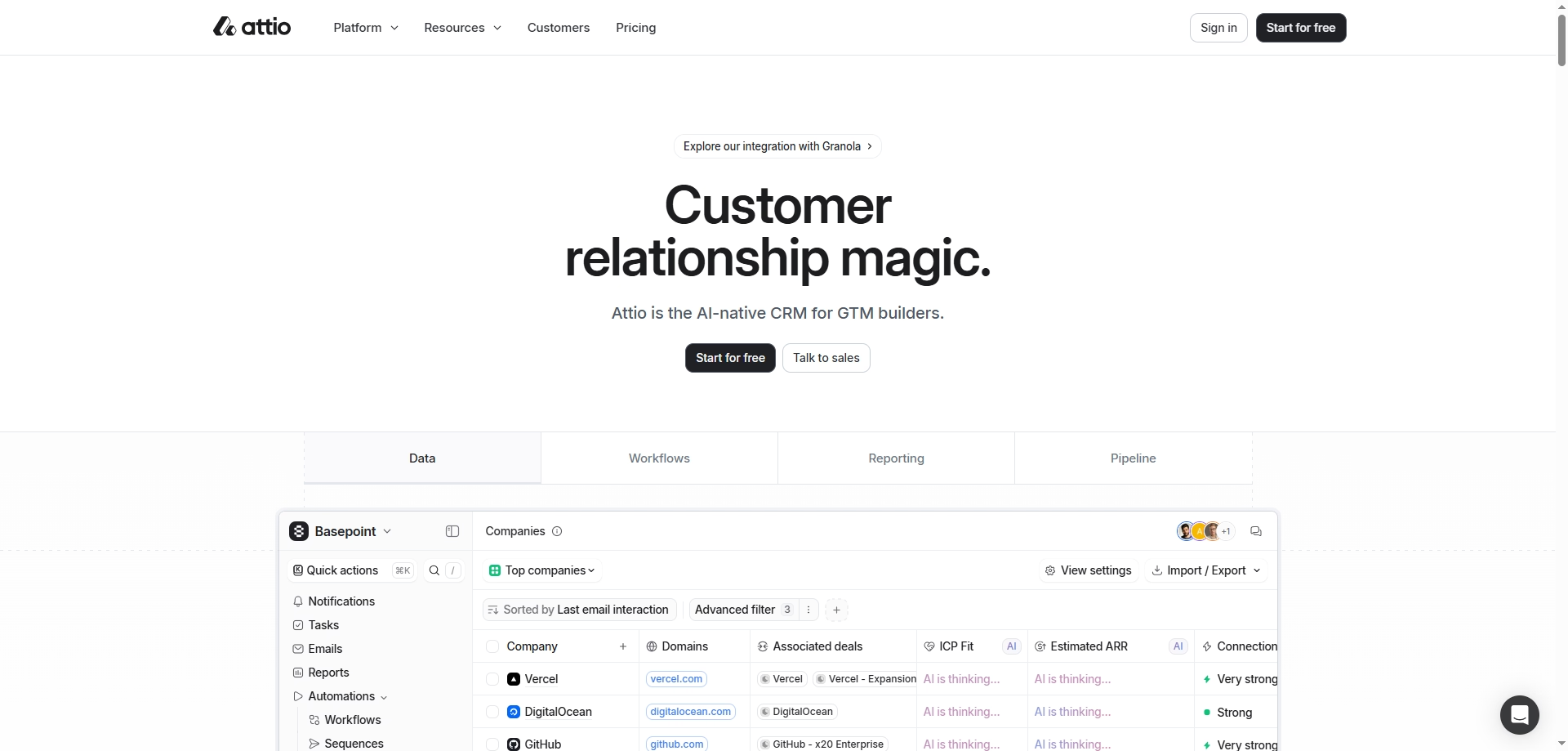
Attio is an AI-powered CRM designed to help sales teams manage relationships and close deals faster. It centralizes contact, company, and deal data while automating routine tasks, so teams spend less time on admin and more on selling.
It improves lead tracking, deal management, and customer engagement with smart workflows and AI insights.
Attio integrates seamlessly with email and calendar apps, syncing data automatically to keep your pipeline updated without extra work. It also supports building custom workflows and reports tailored to your sales process.
What sets Attio apart is its flexibility to adapt to your unique sales model while offering powerful AI to identify opportunities, prioritize leads, and automate complex workflows.
It combines speed, scale, and ease of use in one platform that grows with your team.
Quick facts:
Pros:
Cons:
Pricing:
Attio offers a free 14-day trial. Paid plans start at $30 per user/month with additional features and higher automation limits. Enterprise pricing is available for large teams or custom needs.
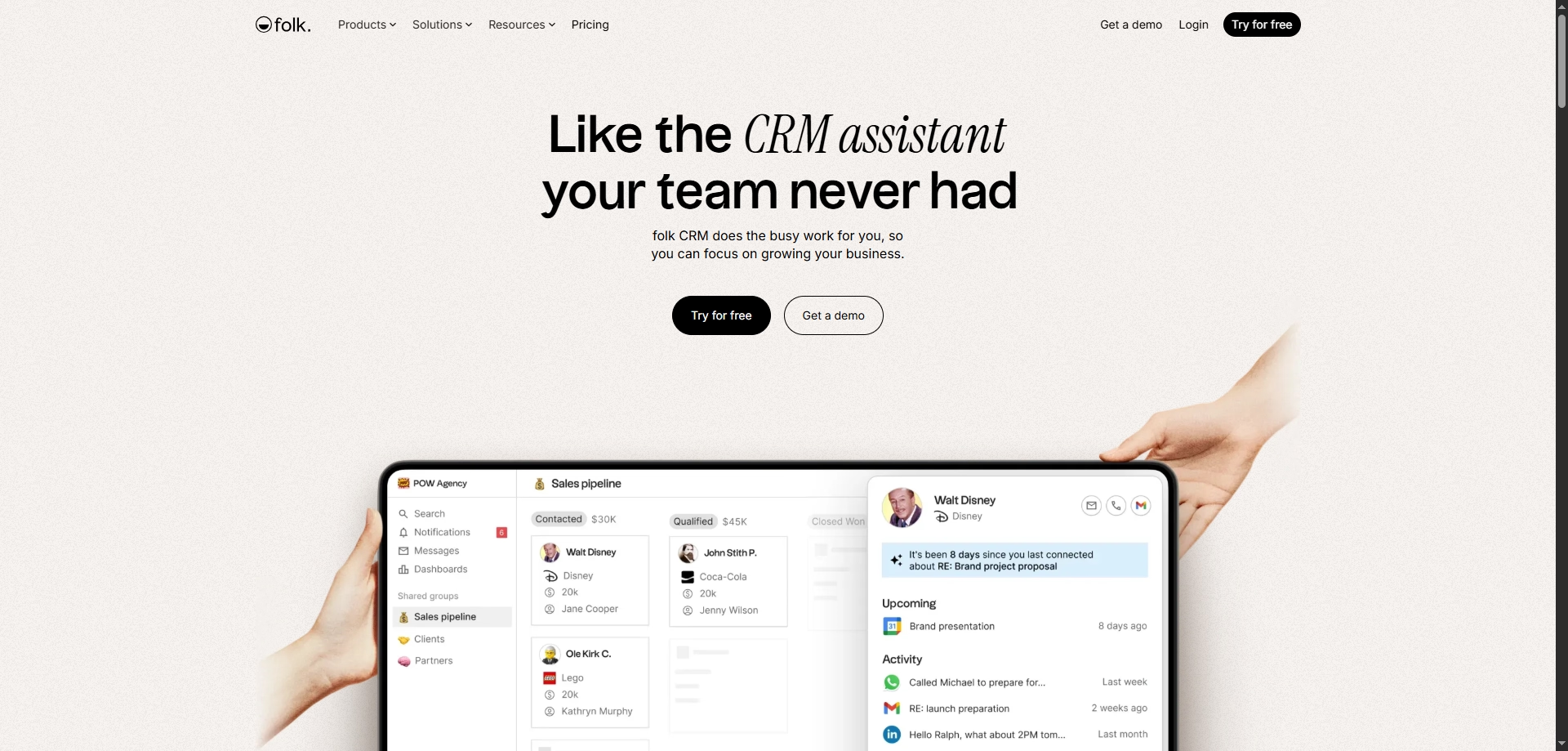
Folk is one of the best sales tools for startups automates the busy work in sales so your team can focus on closing deals. It helps capture leads fast, enrich contact info, send personalized outreach at scale, and manage pipelines collaboratively.
It keeps your sales data clean, organized, and connected to your other sales software tools.
Folk fits into daily sales by syncing with emails, LinkedIn, calendars, and CRMs. It automatically updates contact details, tracks conversations, and suggests the best time to follow up.
Folk acts like a smart sales assistant working 24/7. It automates research and follow-ups, reducing manual data entry. Its deep integrations with platforms like LinkedIn and Gmail streamline prospecting and outreach better than most CRMs.
Quick facts:
Pros:
Cons:
Pricing:
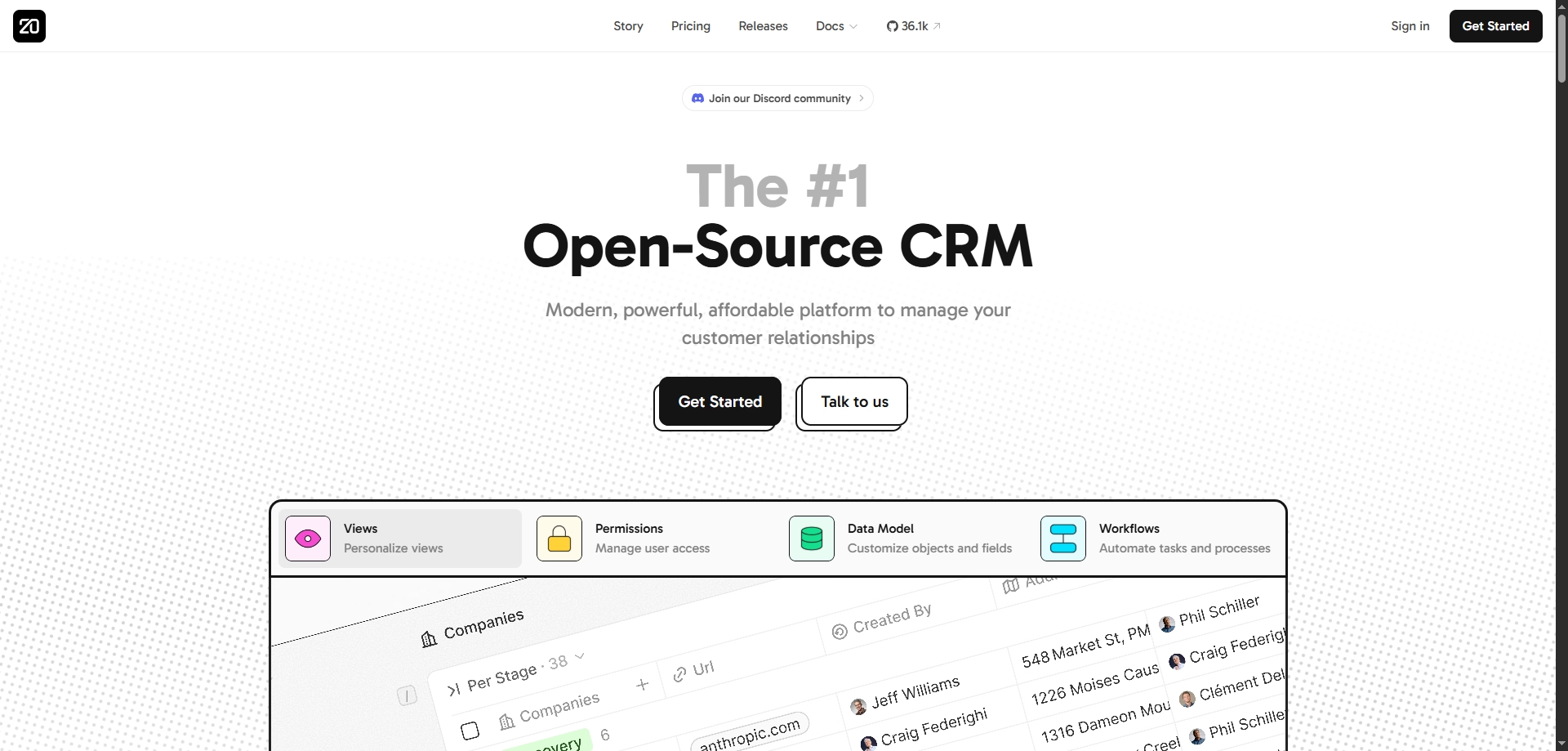
Twenty is an open-source CRM that helps sales teams manage and track customer data easily. It lets teams stay organized, automate routine tasks, and keep all client information in one place. This saves time and improves follow-ups and deal management.
Teams import customer data, customize views and fields, then use workflows and automation to streamline daily sales activities and keep communication up to date.
Twenty is fully open-source, giving teams complete control over their CRM without vendor lock-in. It's highly customizable and backed by a strong developer community for ongoing improvements and security.
Quick facts:
Pros:
Cons:
Pricing:
Free tier available with basic features. Paid plans start at $25/month for advanced tools for sales teams and support commands. Custom enterprise pricing for large teams or high-volume use.
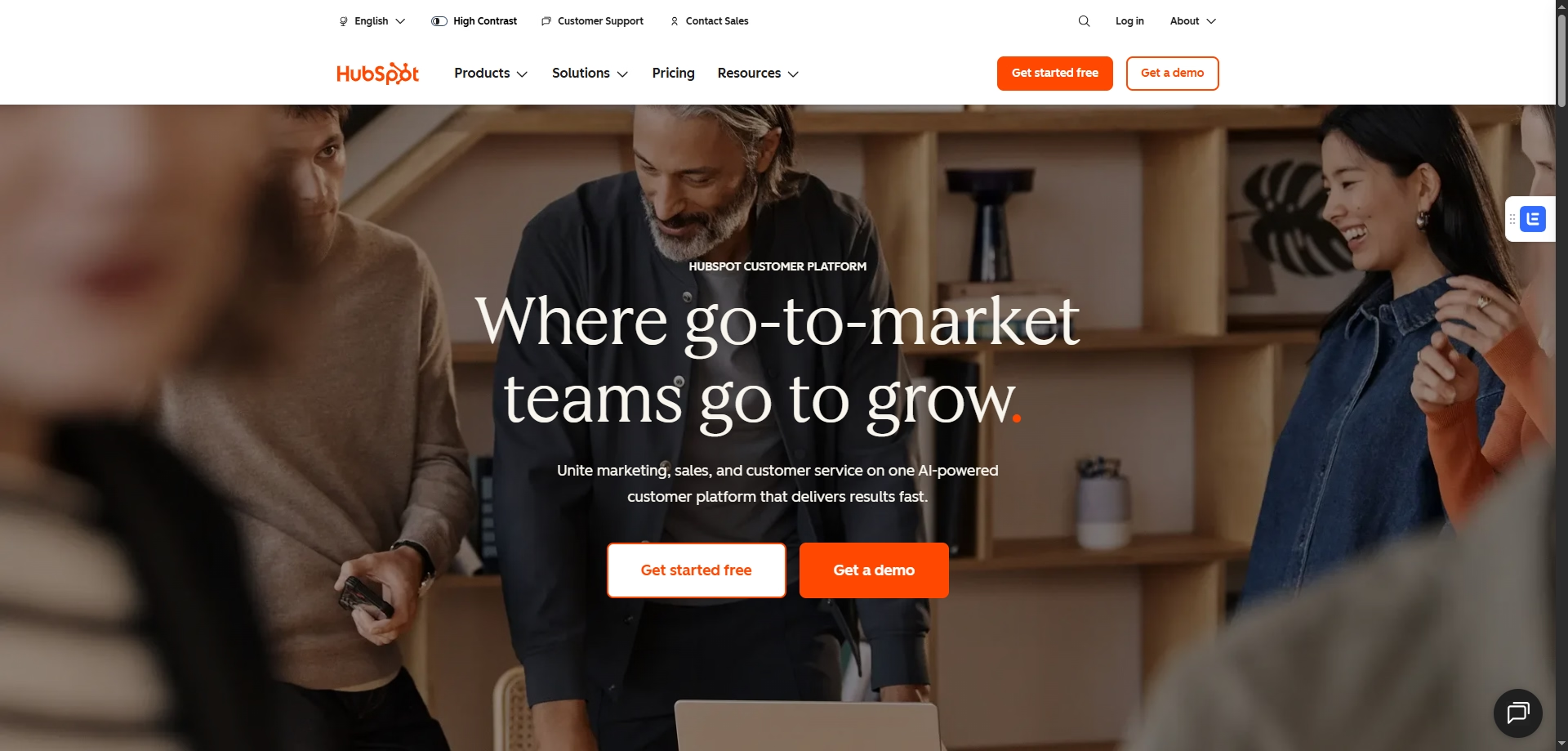
One of the free sales tools, HubSpot helps sales teams grow their pipeline, close deals faster, and keep customers happy. It unifies marketing, sales, and customer service tools to streamline workflows and improve team collaboration for better business results.
It works by integrating all customer data and sales activities into one platform. Teams can track leads, automate tasks, and get AI-powered insights day to day.
What makes HubSpot stand out is its AI-powered Breeze agents that automate prospecting, customer support, and content creation. It also offers seamless integration across marketing, sales, and service hubs for a complete view of the customer journey.
Quick facts:
Pros:
Cons:
Pricing:
Offers a free tier with basic CRM tools. Paid plans start around $50/month per hub with additional tiers for advanced features. Enterprise pricing is custom based on volume and needs.
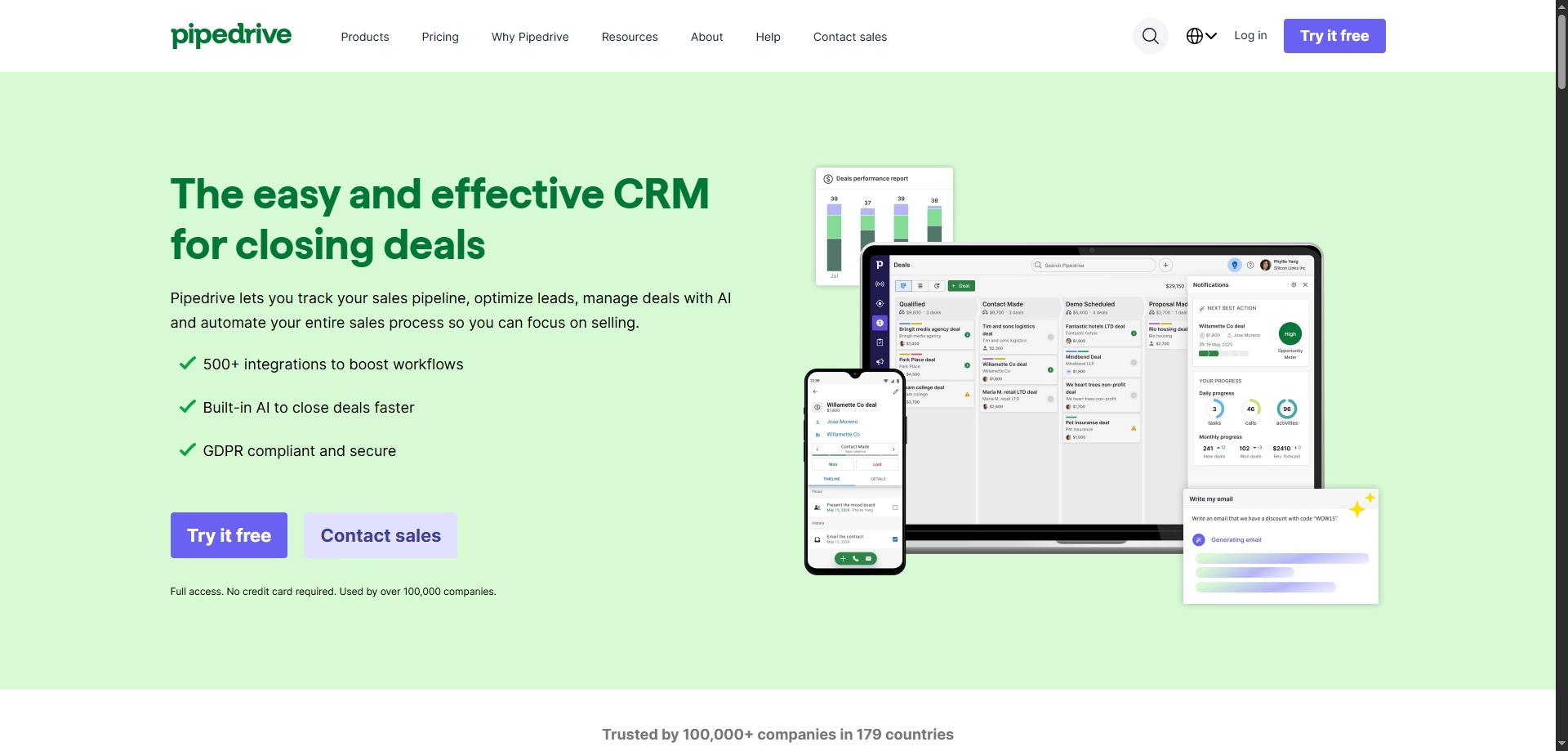
Pipedrive helps sales teams track leads, manage deals, and close sales more efficiently. It keeps your sales process organized, automates follow-ups, and provides clear insights so you can focus on the right opportunities and increase revenue.
It works by giving sales reps a simple pipeline view to move deals forward, automating routine tasks, syncing emails and calendars, and delivering real-time reports to monitor progress.
What makes it stand out is its user-friendly design combined with powerful AI tools that prioritize important deals and automate sales steps, saving time and boosting success without complexity.
Quick facts:
Pros:
Cons:
Pricing:
Once your relationships are organized, it's time to fill that pipeline. Here's how to find better leads faster and spend your time on the right prospects.
Tired of chasing the wrong people? The right sales tools for sales reps help you spot high-quality prospects quickly so you spend time where it actually counts.
Here's how the tools compare:
| Tool | Best for | Strength | Setup effort | Ideal ICP | Pricing tier |
|---|---|---|---|---|---|
| Wiza | Real-time contact verification | Delivers live-verified emails and phone numbers with high accuracy | Low | Solo / SMB / Mid-Market | $ |
| Prospeo | Fast contact discovery | Finds verified emails and mobile numbers with 98% deliverability | Low | Solo / SMB / Mid-Market | $ |
| FullEnrich | Multi-source lead enrichment | Aggregates data from 20+ premium sources with strong verification | Medium | SMB → Enterprise | $$ |
| Unify | Intent-driven outbound automation | Combines AI signals, personalization, and multi-channel execution | Medium | SMB → Enterprise | $$ |
| Common Room | Real-time buyer intent insights | Turns online activity into actionable leads with AI-driven prioritization | High | Mid-Market / Enterprise | $$$ |
| Apollo | All-in-one sales automation | Merges contact data, outreach, and deal tracking in one AI platform | Medium | SMB → Enterprise | $$ |
| Ocean | AI-driven prospecting | Provides fresh, relevant company and contact data for targeting | Low | SMB → Enterprise | $$ |
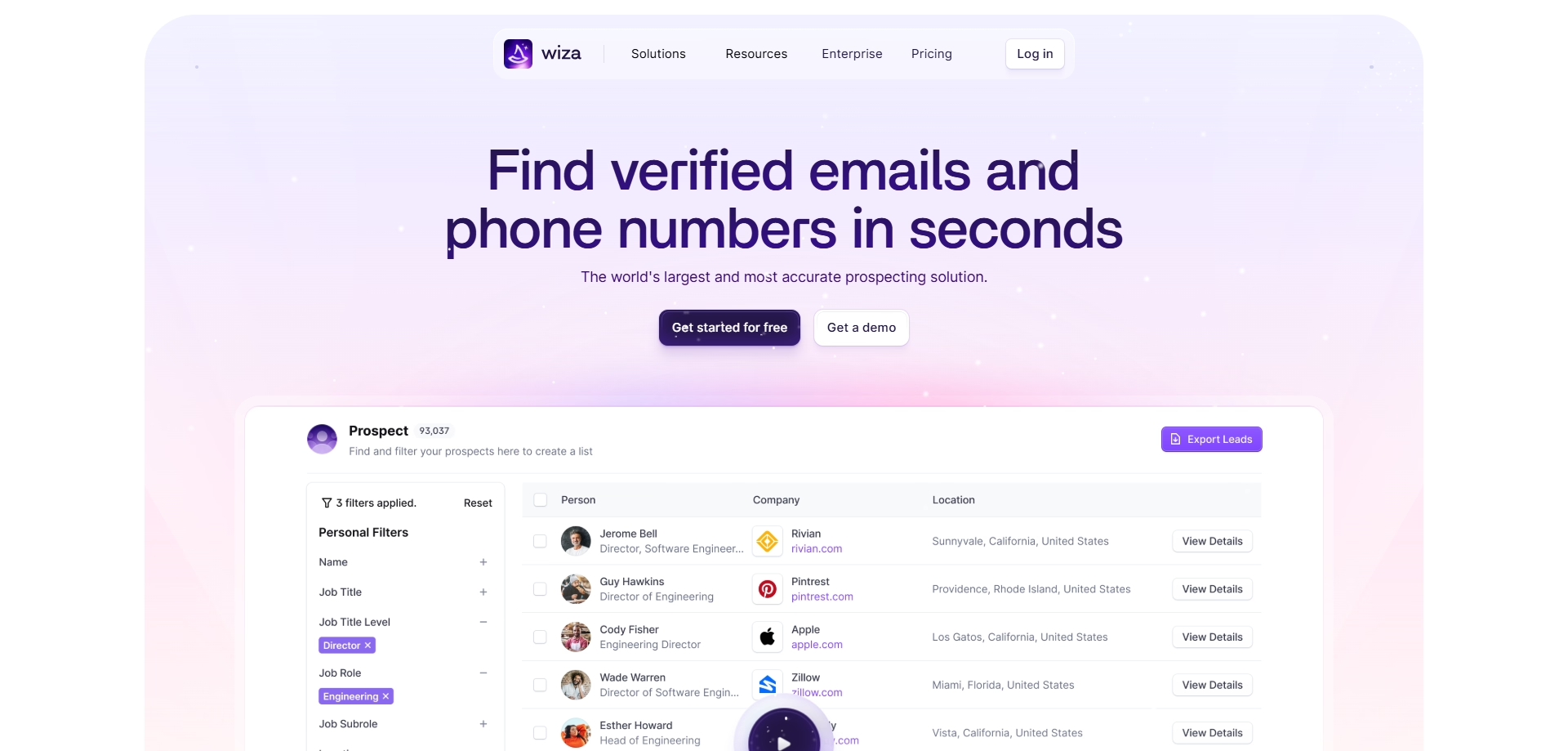
Wiza helps sales teams quickly find accurate, verified email addresses and phone numbers for prospects.
It reduces time spent on manual research and boosts outreach success by providing up-to-date contact data you can trust.
Wiza integrates seamlessly with your daily workflow through its Chrome extension, letting you extract contact info from LinkedIn profiles and export it directly to your CRM or CSV files.
What sets Wiza apart is its real-time data verification, ensuring nearly 100% accuracy by actively checking live sources, unlike outdated static databases. This leads to fewer bounced emails and higher response rates.
Quick facts:
Pros:
Cons:
Pricing:
Free tier offers 20 credits to get started. Paid plans begin at $97/month with more credits and features. Enterprise pricing is custom for large teams and high usage.
Prospeo helps sales teams quickly find verified business email addresses and mobile numbers to boost outreach success. It ensures high deliverability, saving hours spent searching and increasing connection rates with prospects.
It integrates seamlessly into daily workflows with a Chrome extension and bulk processing, letting teams find and verify contacts from websites or spreadsheets in just a few clicks.
What makes Prospeo stand out is its accuracy and ease of use. Its mobile number finder and built-in email verifier improve response rates and reduce bounce rates better than most SaaS sales tools.
Quick facts:
Pros:
Cons:
Pricing:
Free tier offers 75 free monthly credits. Paid plans start at affordable rates per credit with tiered pricing. Custom enterprise plans available for high-volume needs.
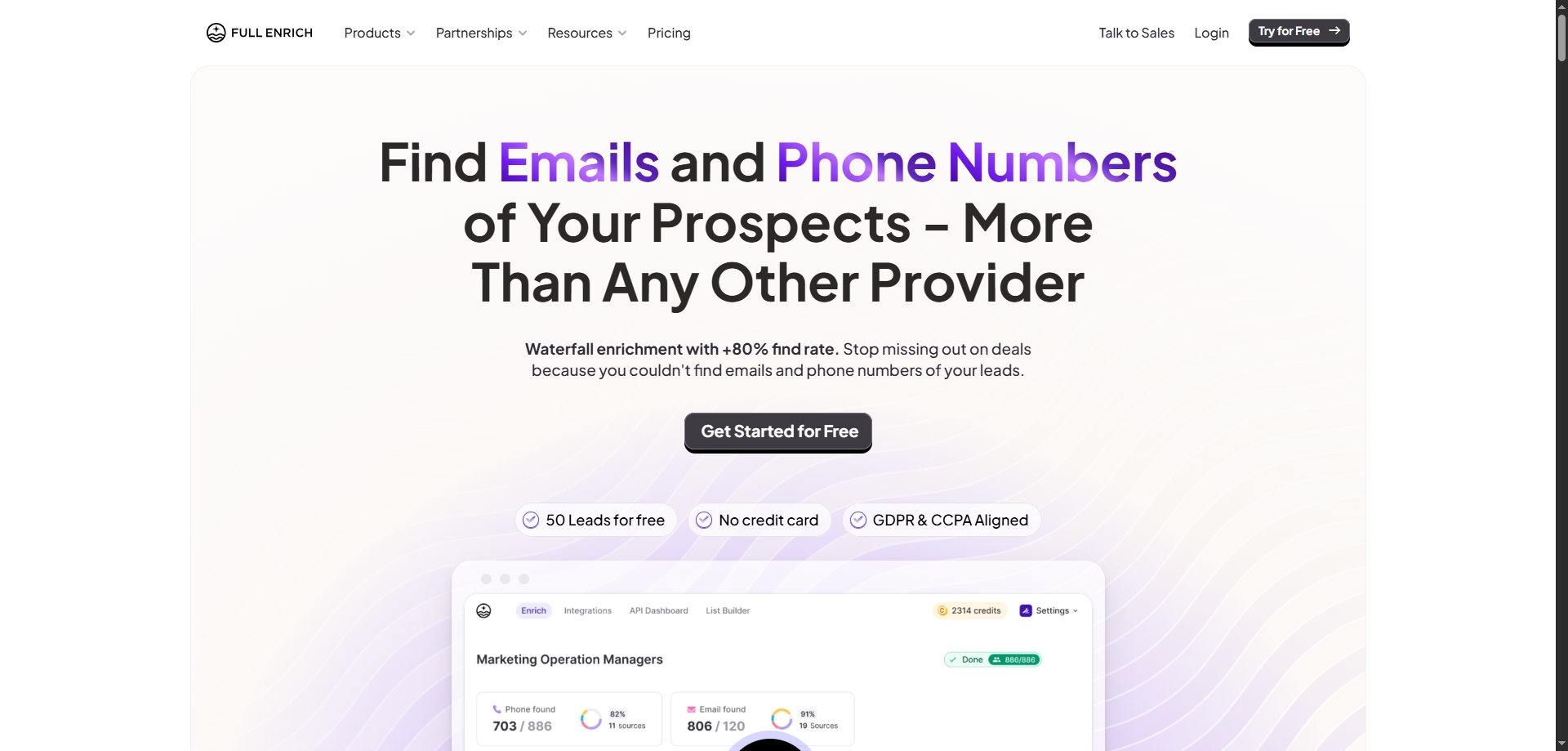
FullEnrich helps sales teams find accurate emails and phone numbers for their leads. It boosts contact rates by filling in missing information, letting salespeople connect with prospects faster and close more deals.
It works by aggregating data from over 20 premium sources and verifying contacts automatically. Teams can enrich lead lists through a simple interface or API.
What makes it stand out is its high accuracy and find rate (over 80%) and advanced phone and email verification that reduces bounce rates and wasted outreach efforts.
Quick facts:
Pros:
Cons:
Pricing:
Free tier offers 50 free credits to test. Paid plans start at $29/month or per credit. Enterprise pricing is custom based on usage and features.
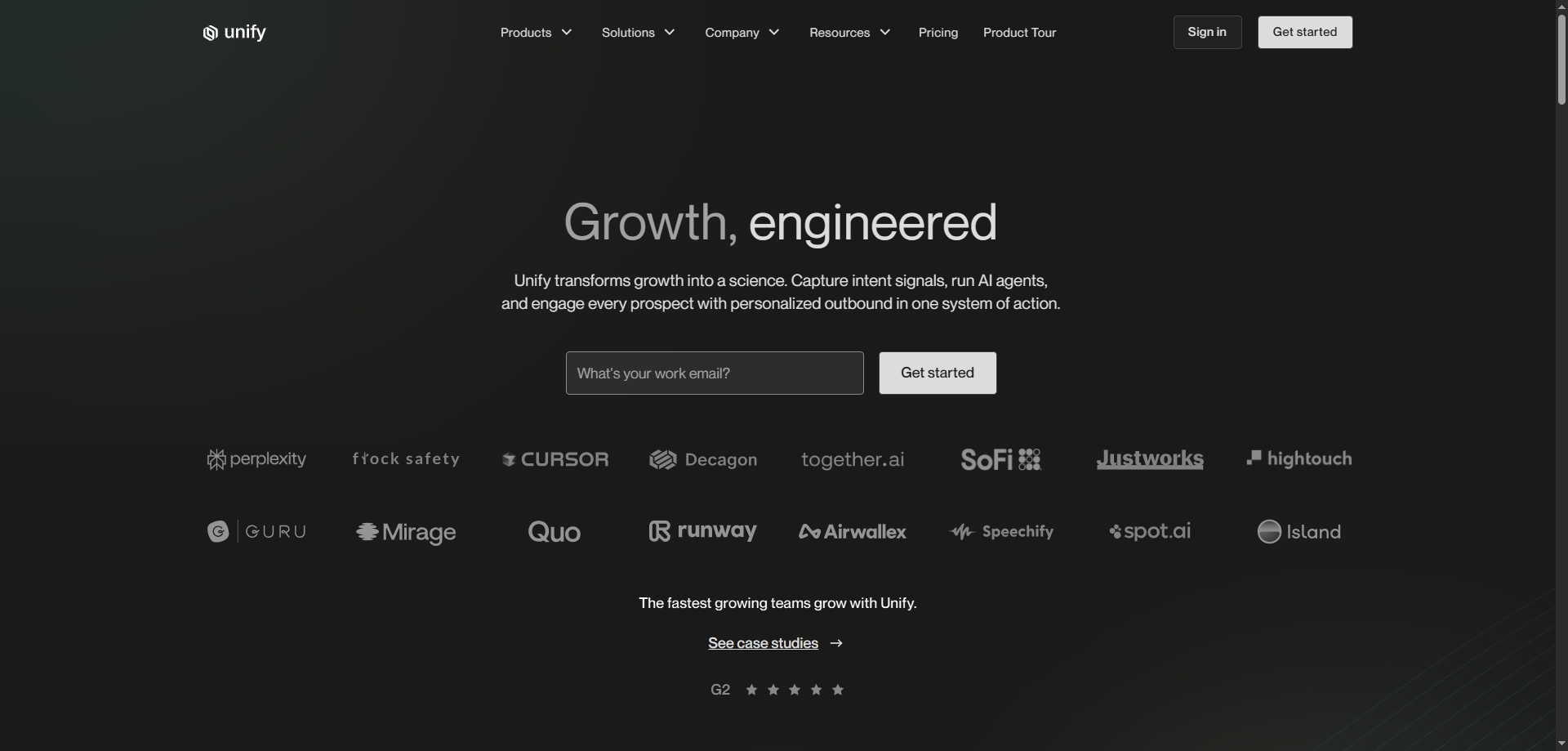
Unify helps sales teams find and engage the right buyers at the perfect time using real-time intent signals. It automates prospecting, personalizes outreach, and tracks engagement to build more pipeline and close deals faster.
It turns growth into a repeatable, data-driven process that makes sales outreach smarter and more efficient.
Unify fits into daily workflows by using signals to trigger automated workflows that research, enrich, and engage prospects with personalized multi-channel sequences.
It stands out by combining intent signals, AI-powered research, and seamless multi-channel execution in one easy-to-use platform, enabling sales teams to scale personalized outbound without extra complexity.
Quick facts:
Pros:
Cons:
Pricing:
Offers a free trial to get started. Paid plans start at around $100/month with scalable tiers for growing teams. Enterprise pricing is custom based on volume and needs.
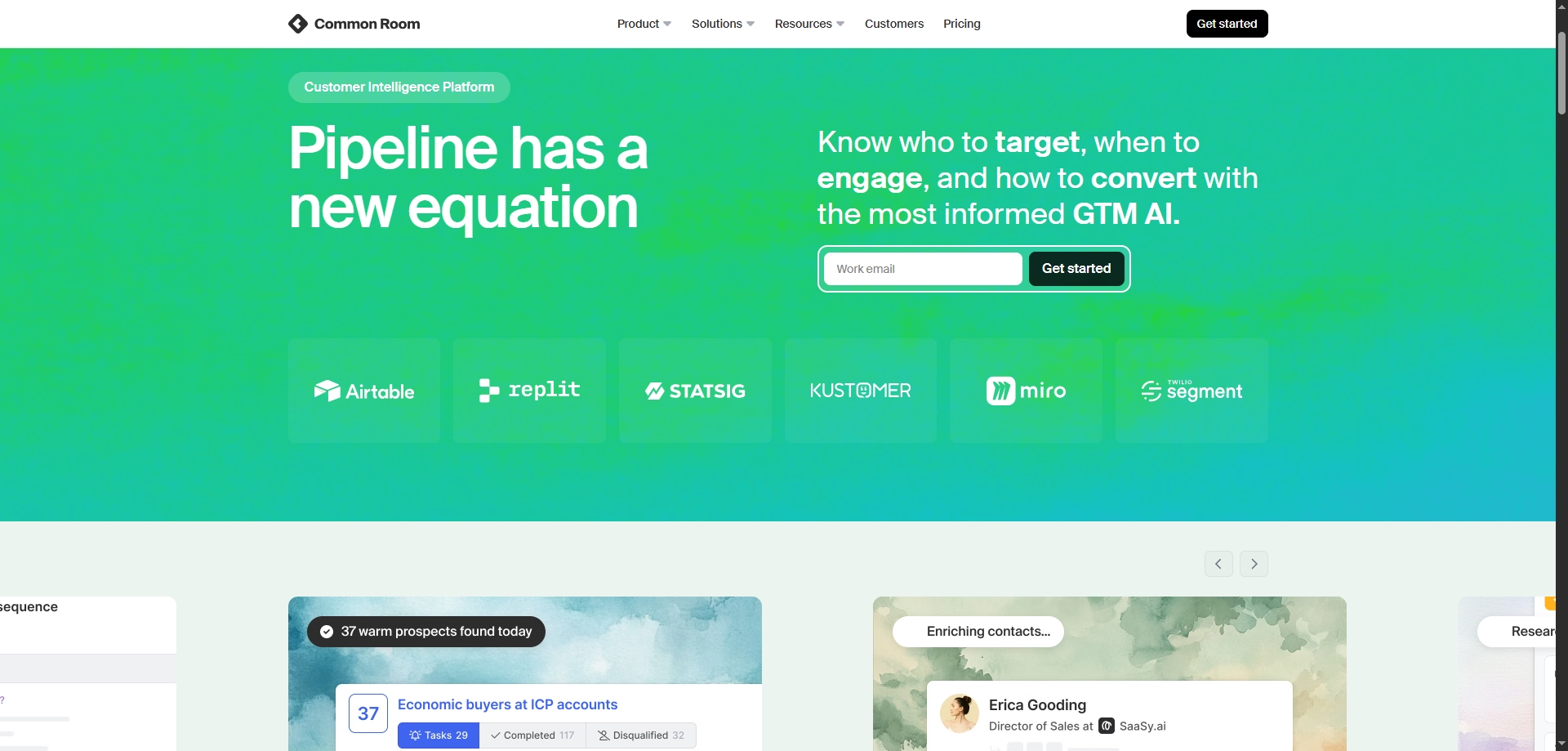
Common Room helps sales teams find and act on real buying signals. It turns anonymous online activity into known prospects. Sales reps get alerts on when and who to contact, making outreach timely and personalized.
It boosts meeting rates and pipeline growth by focusing efforts on the right accounts.
It fits into daily sales by delivering AI-driven insights and automation directly within existing workflows, helping reps prioritize leads and automate personalized outreach quickly.
What makes it stand out is its AI-powered, always-on signal hunting combined with best-in-class customer data enrichment and identity resolution. These features enable reps to work smarter, not harder, increasing conversion without added complexity.
Quick facts:
Pros:
Cons:
Pricing:
No free tier, offers personalized pricing based on company size and needs. Paid plans start with custom quotes to match volume and feature requirements. Enterprise options available for large-scale deployments.
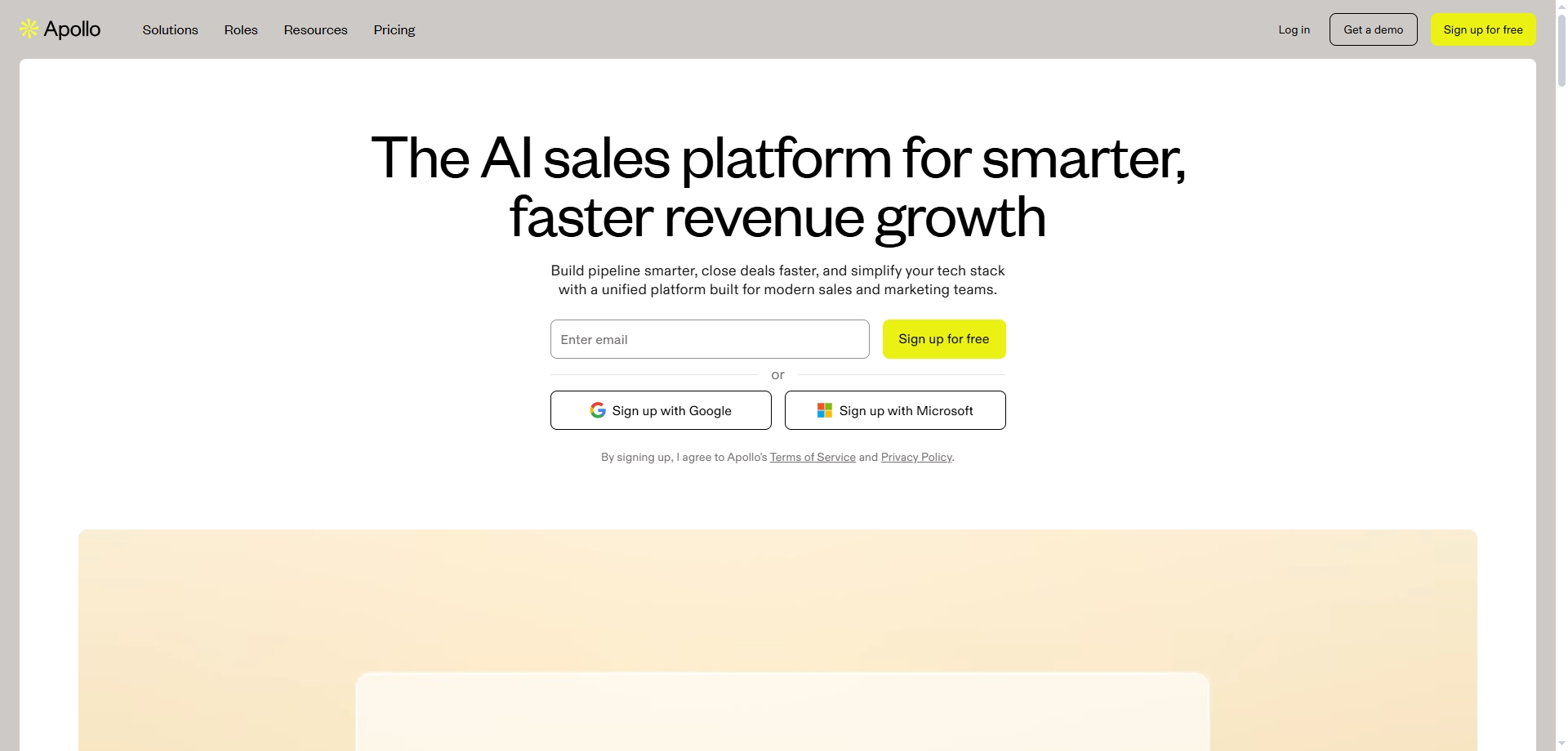
Apollo is an AI-driven sales platform that helps GTM teams find more leads, connect faster, and close deals quicker. It combines contact data, outreach automation, and pipeline management in one place to boost sales efficiency and growth.
Apollo fits into daily sales workflows by providing verified contacts, automating outreach sequences, enriching data, and offering AI-powered call summaries and deal alerts, keeping sales reps focused on selling.
What makes Apollo stand out is its all-in-one approach that replaces multiple tools with one platform. It uses a vast, fresh B2B database and AI to automate tasks, improve targeting, and speed up every step from prospecting to closing.
Quick facts:
Pros:
Cons:
Pricing:
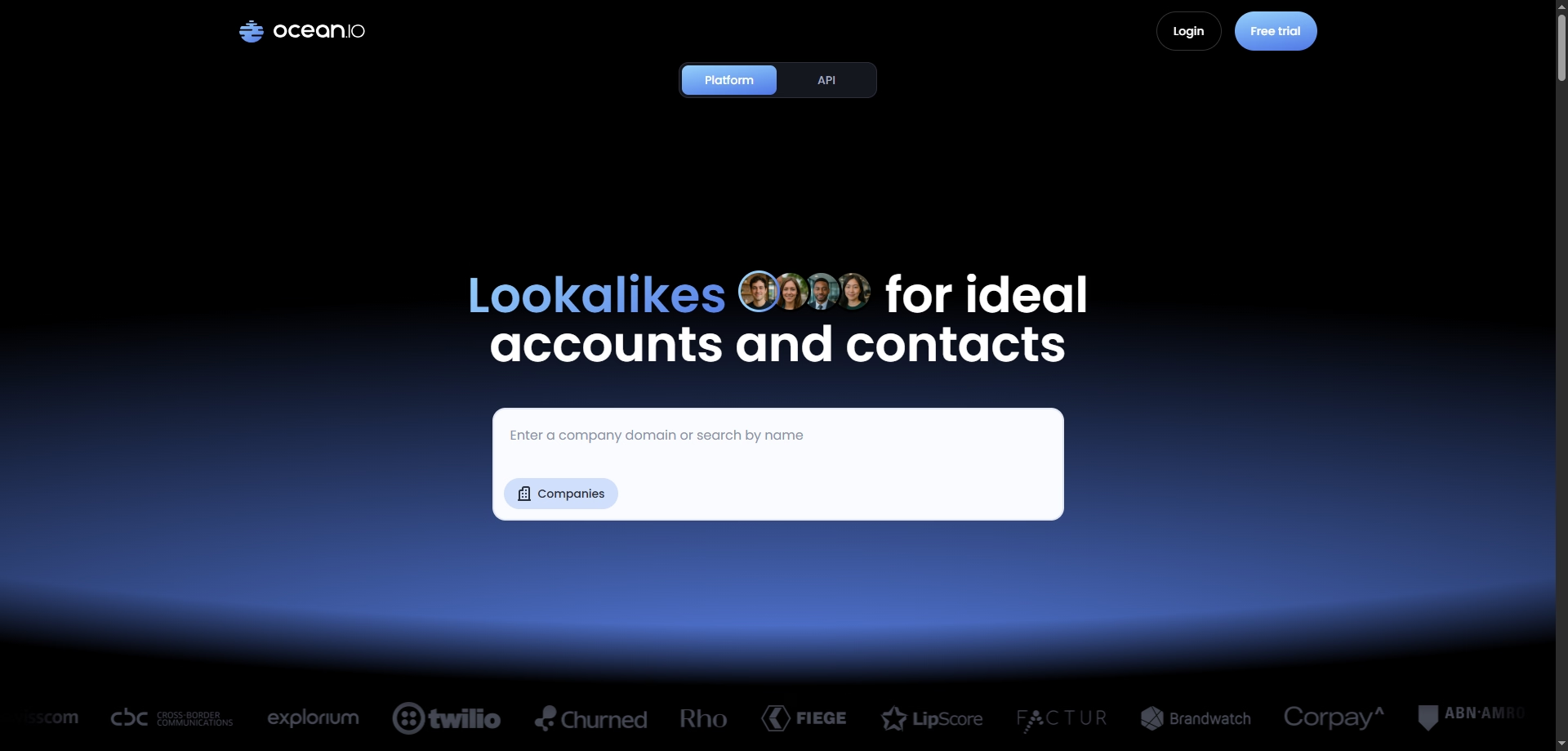
Ocean helps sales teams find the best companies and contacts to target. It provides fresh, accurate data so teams spend less time searching and more time closing deals. By identifying lookalike accounts and contacts, it boosts lead quality and campaign success.
Sales teams use Ocean to quickly build targeted lists based on ideal customer profiles. It fits into daily workflows by syncing data with CRMs and automating audience creation.
Ocean offers deep, AI-driven data that is constantly updated by a dedicated data science team, ensuring leads are relevant and accurate.
Its seamless API and integrations make it easy to connect with existing sales tools.
Quick facts:
Pros:
Cons:
Pricing:
Finding leads is only half the game. The real wins happen when you reach out at the right time and follow up consistently. Let's see how to do that effortlessly.
If you've ever missed a perfect moment to follow up, you know the pain. These sales tools for sales reps automate timing so every message hits when it matters most.
Here's how the best tools for sales compare:
| Tool | Best for | Strength | Setup effort | Ideal ICP | Pricing tier |
|---|---|---|---|---|---|
| lemlist | Multichannel outreach automation | Combines lead sourcing, AI personalization, and deliverability in one platform | Medium | SMB / Mid-Market / Sales Teams | $$ |
| Expandi | LinkedIn and email outreach automation | Fully automates personalized LinkedIn and email sequences with smart workflows | Low | SMB / Mid-Market / Agencies | $$ |
| Valley | AI-personalized LinkedIn outreach | Automates high-quality LinkedIn outreach with human-like messages | Low | Solo / SMB / Mid-Market | $$ |
| Instantly | Scalable cold email outreach | Supports unlimited email accounts with strong deliverability and AI optimization | Low | SMB / Agencies / Freelancers | $$ |
| Smartlead | Automated cold email & deliverability | Manages unlimited mailboxes with AI-driven warmups and reply automation | Low | SMB / Mid-Market / Agencies | $$ |
| Reply.io | Full multichannel outreach | Unifies email, LinkedIn, calls, and SMS with AI-powered personalization | Medium | SMB → Enterprise | $$$ |
| NeverBounce | Email list cleaning & verification | Improves deliverability through real-time bulk email verification | Low | SMB → Enterprise | $ |
| Warmbox | Email warm-up & reputation | Boosts inbox placement with automated, human-like email interactions | Low | Solo / SMB / Mid-Market | $ |
| Lavender | Email optimization & personalization | Enhances cold emails with AI feedback, scoring, and real-time coaching | Low | Solo / SMB → Enterprise | $ |
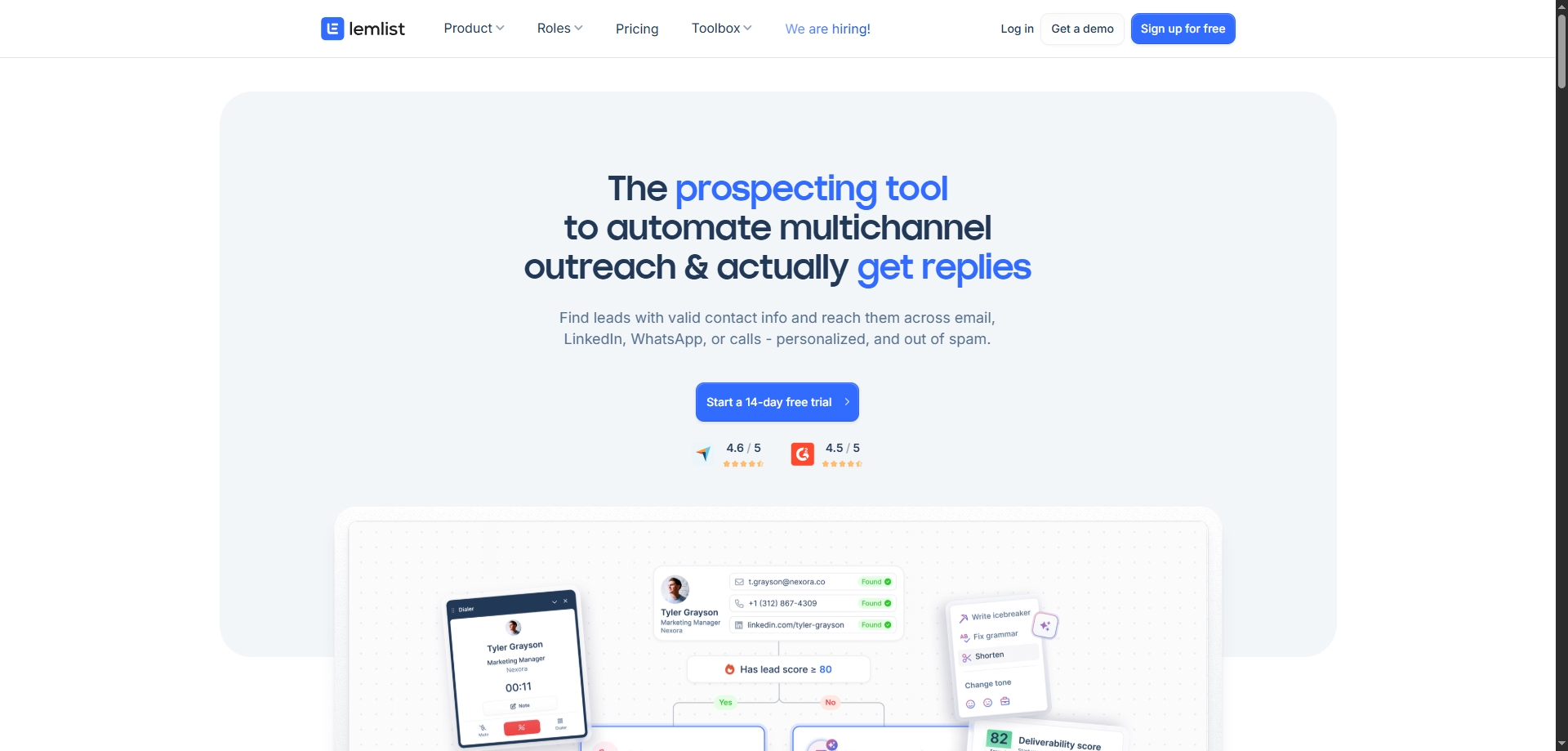
lemlist helps sales teams find qualified leads and automate personalized outreach across email, LinkedIn, WhatsApp, and calls. It boosts response rates by ensuring messages reach inboxes, not spam, all from one platform. The tool saves time while growing your sales pipeline effectively.
You import or find leads, build multichannel outreach sequences, personalize messages with AI, and track replies in a unified inbox, all integrated with your CRM.
lemlist combines lead finding, AI-driven personalization, multichannel outreach, and deliverability tools in one app.
This all-in-one approach removes the need to juggle multiple sales manager tools, making outbound simpler and more productive.
Quick facts:
Pros:
Cons:
Pricing:
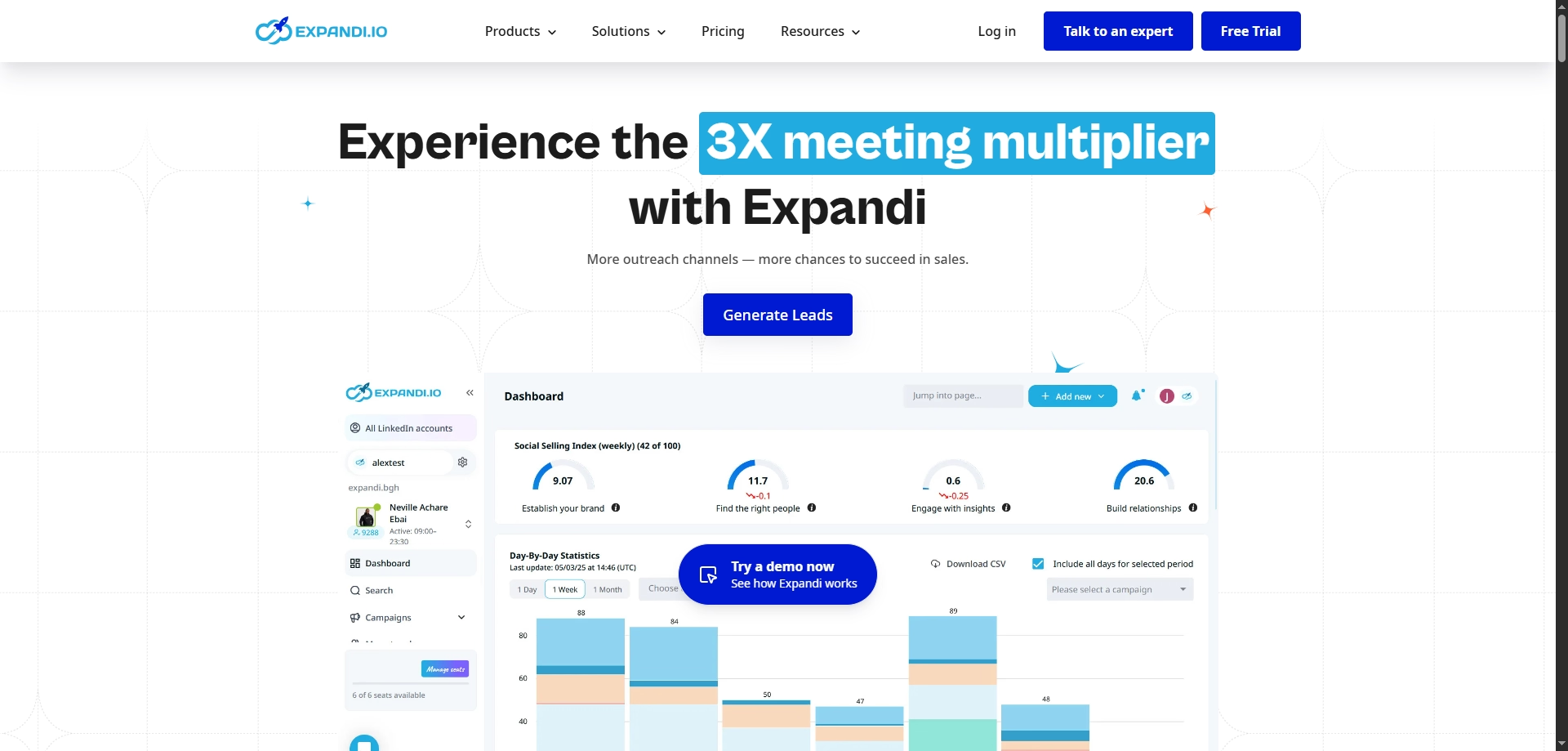
Expandi helps sales and recruitment teams automate their LinkedIn outreach. It lets users find and connect with the right prospects, send personalized messages, and manage follow-ups.
The tool increases meeting bookings and response rates while saving time on manual outreach tasks.
You create smart campaigns with automated sequences on LinkedIn and email. Expandi manages connection requests, messages, and follow-ups based on prospect behavior, all from one dashboard.
Expandi offers advanced personalization and multi-channel outreach that feels human. Its smart workflows adapt to prospect actions, improving engagement and replies. It also supports teams with roles, reporting, and CRM integrations for easy collaboration.
Quick facts:
Pros:
Cons:
Pricing:
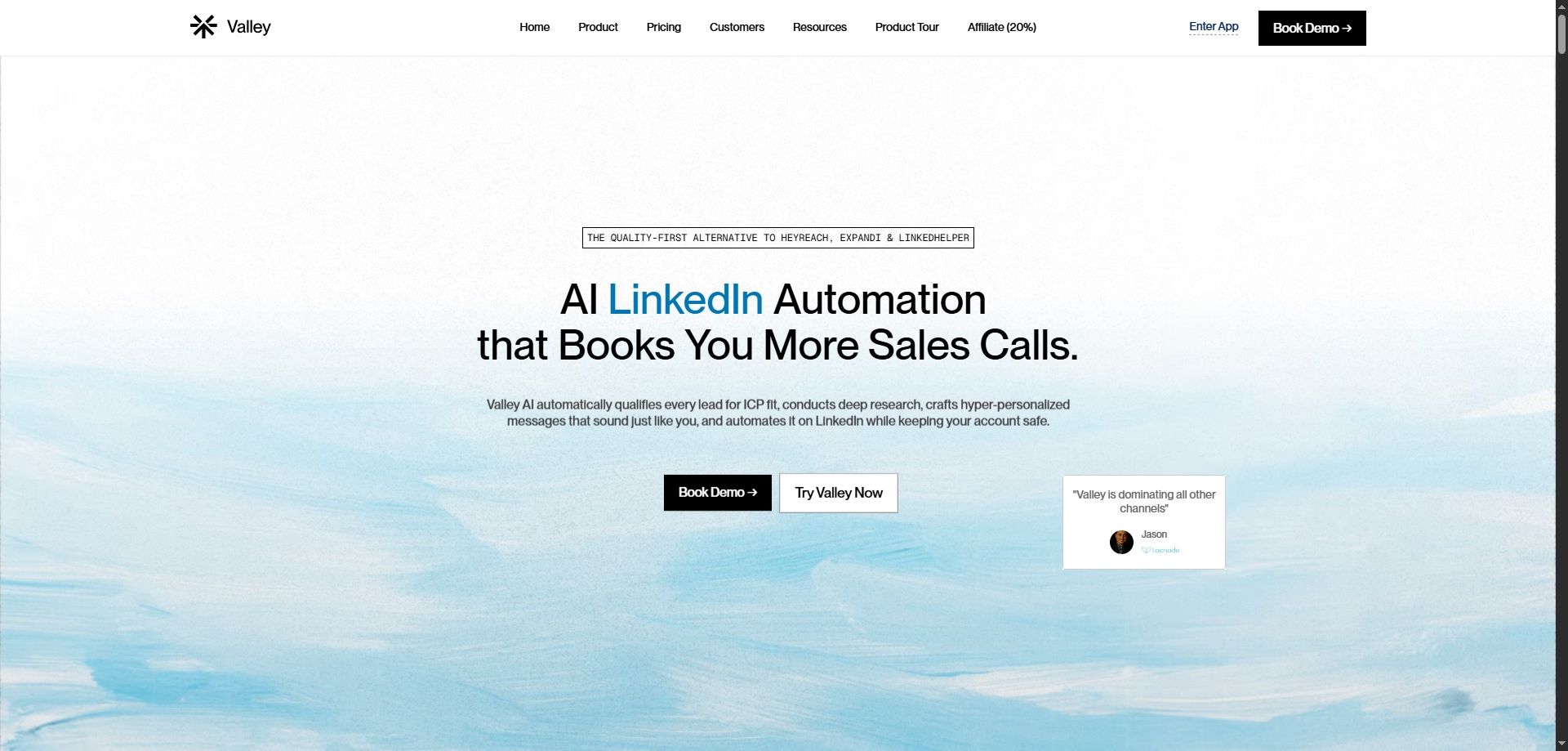
Valley helps sales teams book more sales calls by automating highly personalized LinkedIn outreach. It finds the right leads, researches them deeply, and sends messages that feel personal and natural, all while keeping your LinkedIn account safe from risk.
Valley fits into daily sales by automatically qualifying leads, crafting custom messages in your voice, and managing LinkedIn outreach and replies at scale so you can focus on closing deals.
Valley combines deep lead research with AI-crafted, natural-sounding messages. It triples typical LinkedIn response rates and protects your account, providing a quality-first outreach without complex integrations.
Quick facts:
Pros:
Cons:
Pricing:
Free trial available. Paid plans start at a competitive monthly rate tailored for solo to mid-market users. Enterprise pricing is customized for high-volume teams.
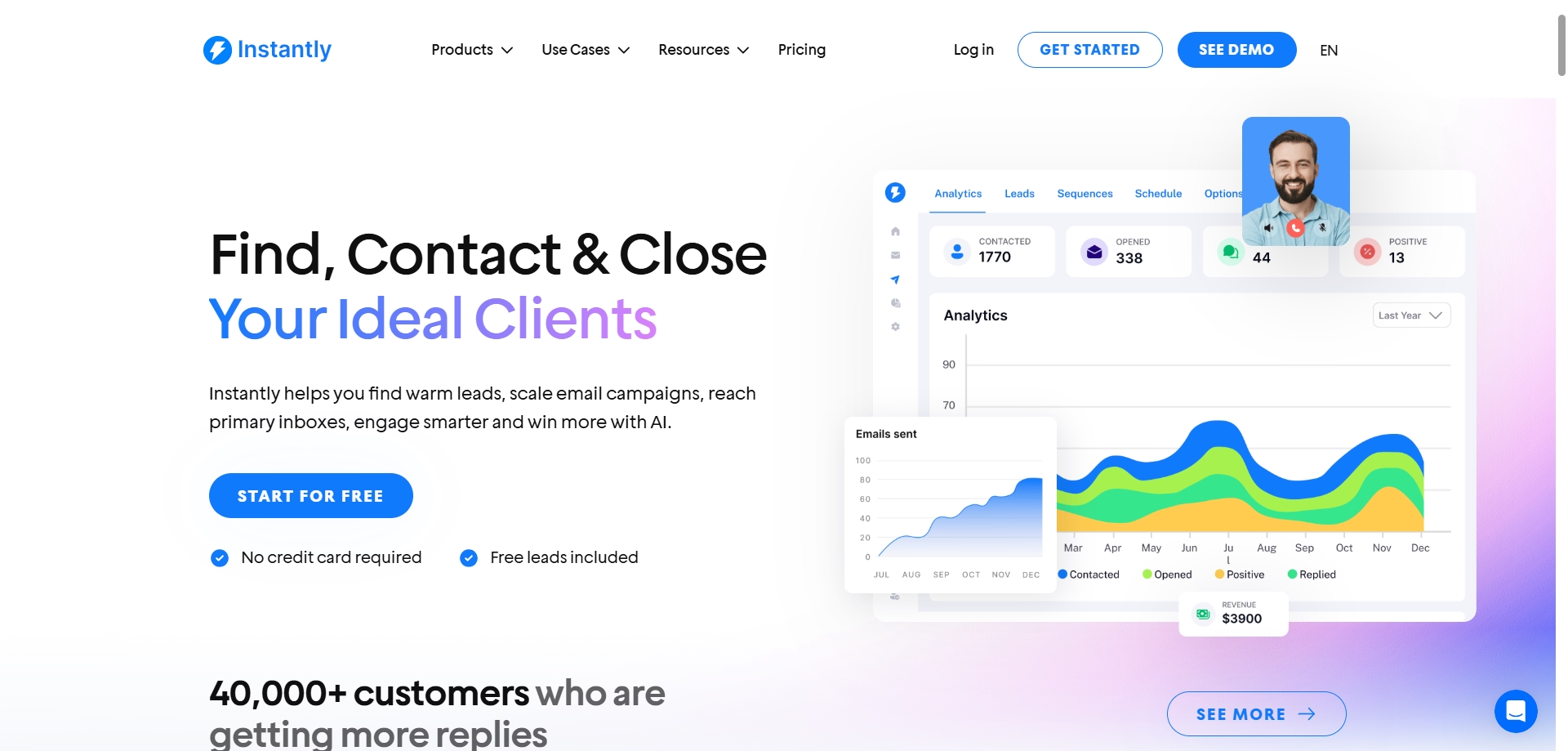
Instantly helps sales teams find the right leads and send personalized email campaigns at scale. It improves inbox placement, automates follow-ups, and boosts reply rates, enabling salespeople to close more deals faster.
Users import or find leads, create email sequences with AI help, and launch campaigns with multiple email accounts. Instantly handles sending, tracking, and optimizing automatically.
Instantly offers unlimited email accounts for scaling outreach confidently and advanced email deliverability tools to reach primary inboxes. Its AI-powered personalization and response management save time and increase engagement.
Quick facts:
Pros:
Cons:
Pricing:
Free tier available with limited leads. Paid plans start at $79/month with more sending capacity and features. Enterprise pricing custom for high-volume users.
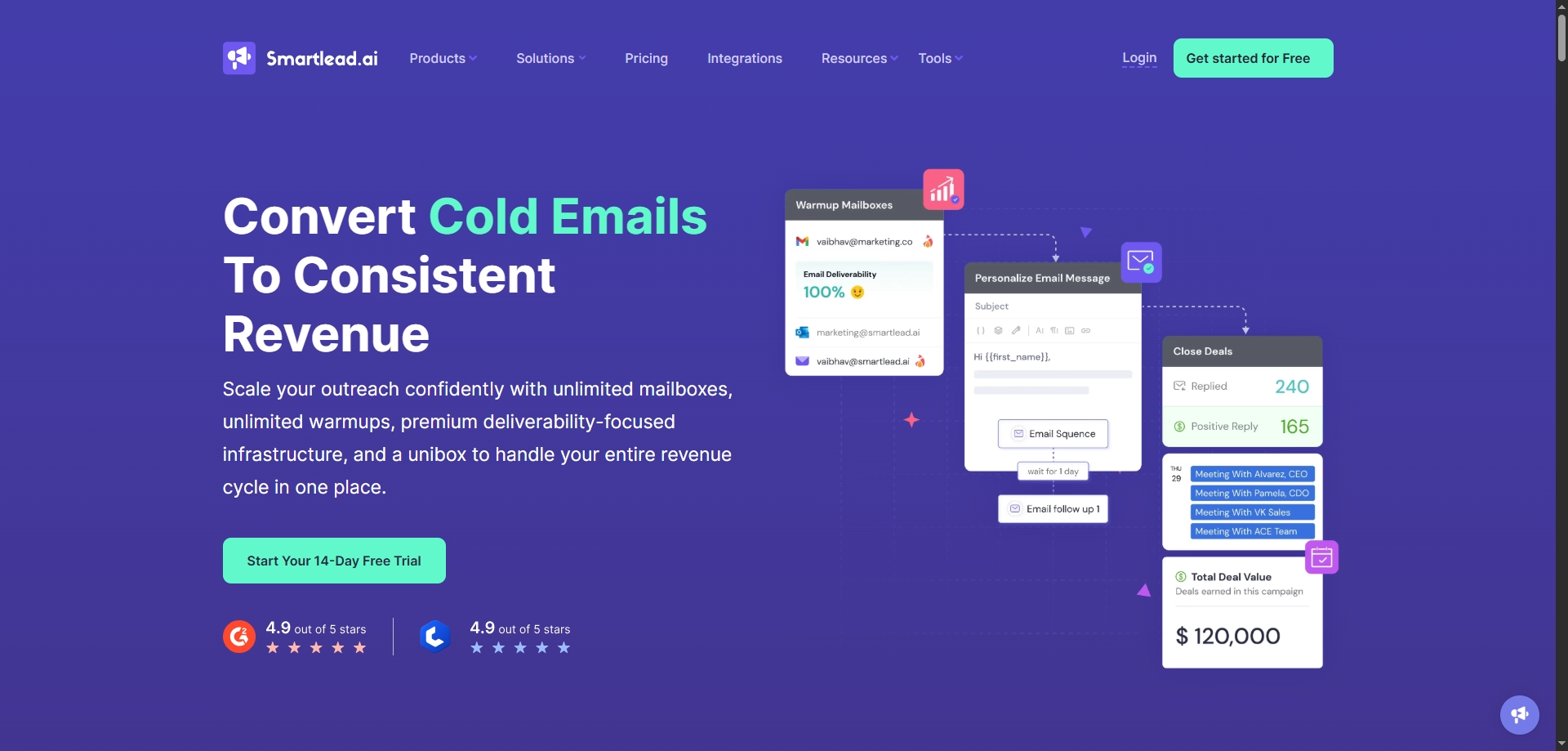
Smartlead helps sales teams turn cold emails into steady revenue by automating outreach and improving email deliverability. It combines unlimited email accounts, AI-driven warmups, and a master inbox to manage all replies and follow-ups in one place. Sales teams save time and get more responses by focusing on qualified leads instead of manual email tasks.
It works by automating cold email campaigns with unlimited mailboxes, rotating emails automatically, and using AI to categorize replies. The unified inbox keeps all communication organized for quick action.
What makes it stand out is its focus on maintaining high inbox placement with unlimited warmups and unique IP rotation.
The master inbox consolidates all conversations, helping sales reps manage replies and close deals efficiently without jumping between tools.
Quick facts:
Pros:
Cons:
Pricing:
Free trial for 14 days. Paid plans start at $39/month for small businesses with essential features. Higher tiers offer more active leads and emails, plus advanced sales manager tools and enterprise options with custom pricing.
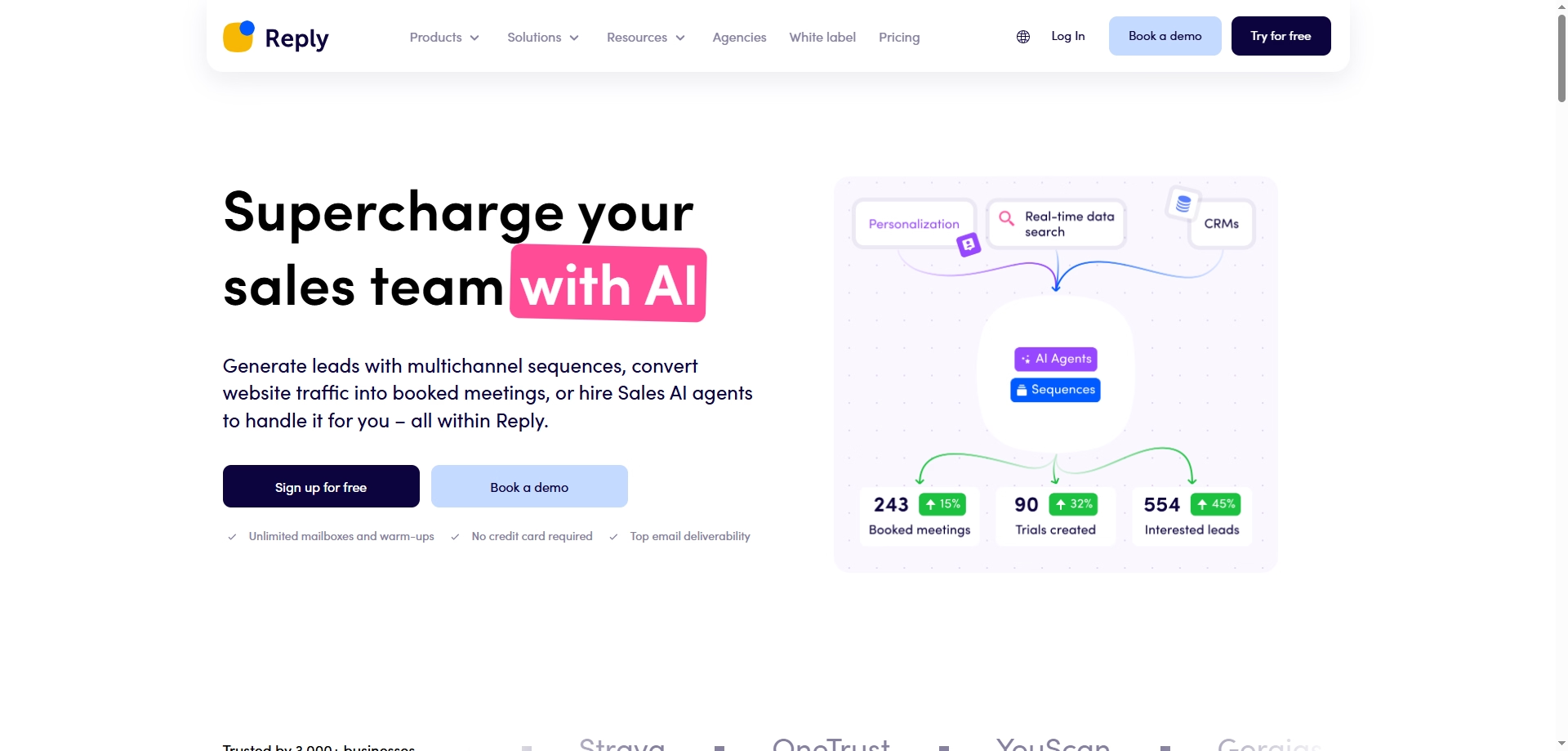
With Reply.io as one of your remote sales tools, sales teams automate and personalize their outreach across email, LinkedIn, calls, and SMS. It boosts response rates, saves time on manual follow-ups, and helps book more meetings with qualified leads.
It's designed to scale outbound sales efforts efficiently without losing the personal touch.
Sales teams create multichannel outreach sequences in Reply.io. The platform uses AI to personalize messages, automate follow-ups, and manage all conversations in one place. Calendar integration simplifies meeting scheduling.
Reply.io combines AI-powered personalization and multichannel automation in one easy platform. It includes real-time data access to over 1 billion contacts and built-in email deliverability tools, ensuring your messages get seen and replied to.
Quick facts:
Pros:
Cons:
Pricing:
No free tier, but a 14-day free trial is available. Paid plans start at $59 per user/month (billed annually) for email automation. AI-powered full-service packages start around $500/month. Enterprise options and agency plans have custom pricing.
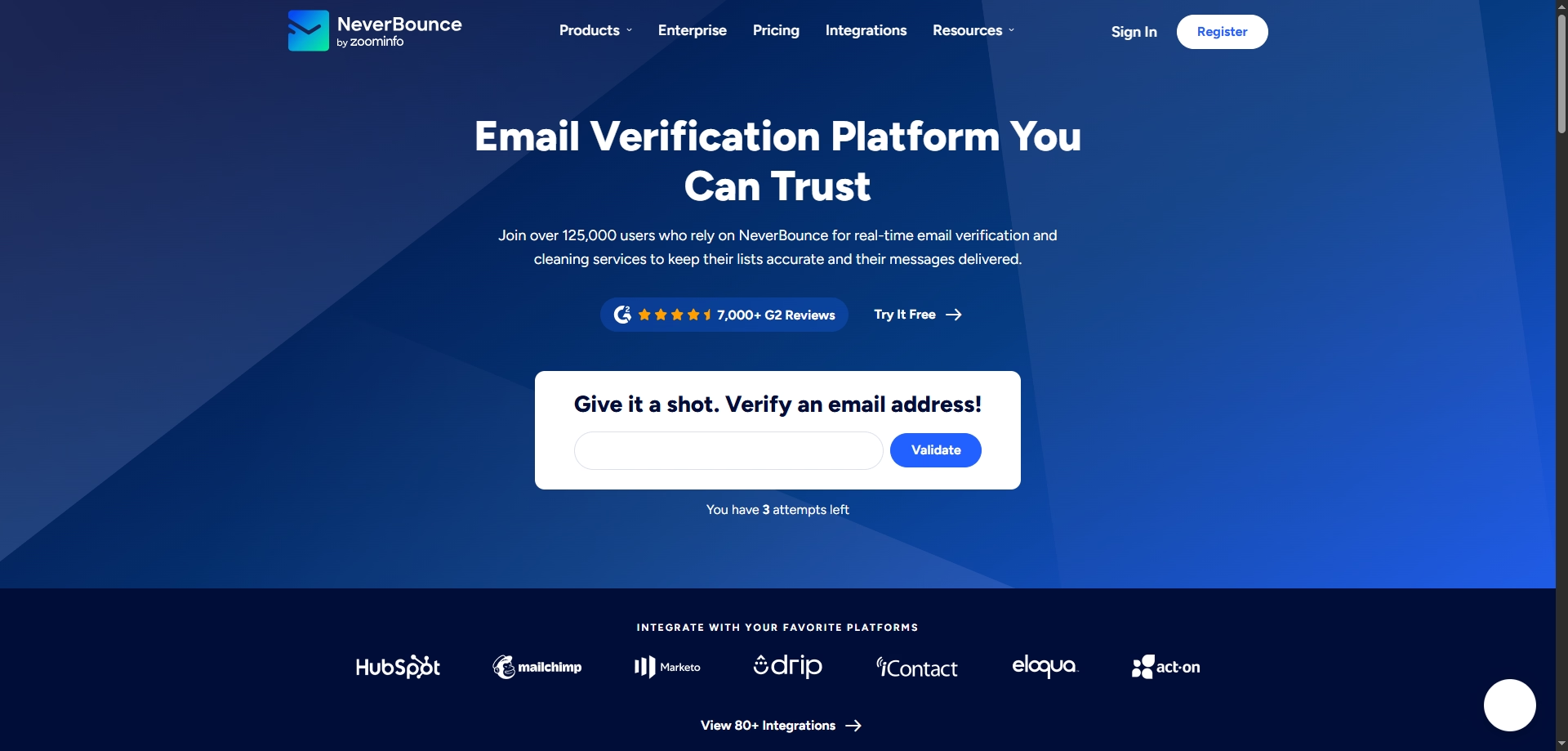
NeverBounce helps sales teams keep their email lists clean and accurate. It verifies email addresses in real-time and removes invalid or risky contacts. This boosts email delivery, reduces bounce rates, and improves campaign performance and sender reputation.
Sales teams upload email lists or connect tools via integrations. NeverBounce scans and cleans the list automatically, providing ready-to-use verified contacts for outreach.
NeverBounce offers fast, reliable email verification with simple setup. It integrates with 80+ platforms, fits seamlessly into workflows, and provides instant bounce analysis, making email campaigns more effective.
Quick facts:
Pros:
Cons:
Pricing:
Free tier available with limited credits to test email verification. Paid plans start from small monthly subscriptions or per-credit pricing for larger volumes. Enterprise pricing is customized for high-volume needs.
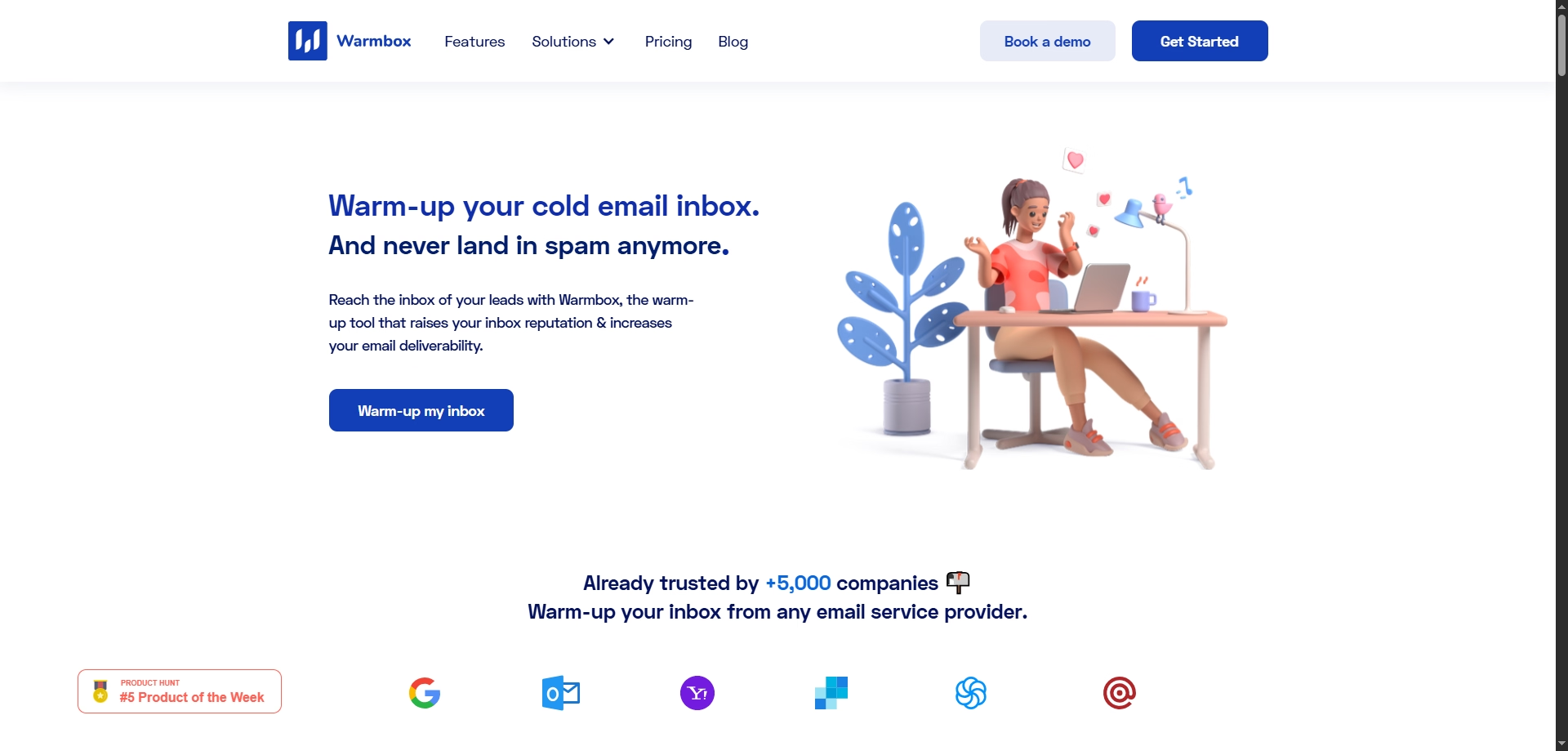
Warmbox helps sales teams ensure their cold emails actually reach prospects' inboxes instead of spam folders. It boosts your email reputation and deliverability by automatically sending, opening, and interacting with emails from your own inbox. This means more leads see your messages, helping you close more deals.
Warmbox fits seamlessly into daily workflows by connecting to your email account and running automated warm-up cycles that mimic natural email activity, keeping your sender reputation healthy without extra effort.
What makes it stand out is its fully automated, human-like email interactions powered by GPT-4, combined with a large private network of inboxes. This unique approach maximizes deliverability safely and effectively, unlike manual or less intelligent warm-up tools.
Quick facts:
Pros:
Cons:
Pricing:
Free tier available with basic features. Paid plans start at $29/month, scaling by the number of inboxes and volume. Enterprise options offered with custom pricing for high-volume needs.
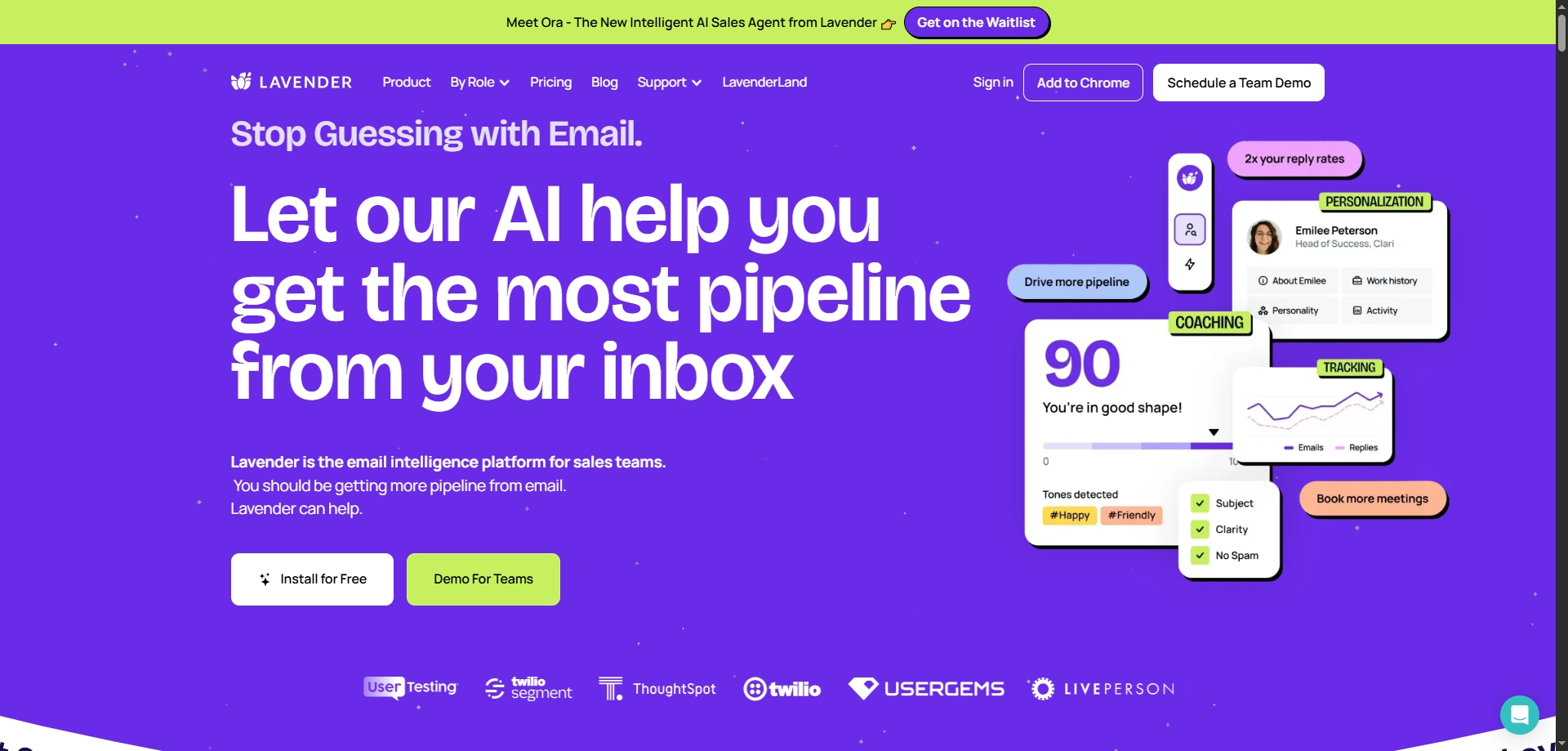
Lavender helps sales teams write better emails that get more replies and create more pipeline. It scores your emails, suggests improvements, and gives tips to personalize messages quickly for each prospect.
It works by analyzing your emails in real time and giving instant feedback while you write. It integrates with your inbox and sales tools to fit seamlessly into your daily workflow.
Lavender stands out by combining AI-powered scoring with smart personalization suggestions based on prospect data and personality insights.
It updates advice continuously to match changing email trends.
Quick facts:
Pros:
Cons:
Pricing:
Lavender offers a free forever plan with limited email analysis. Paid plans start at $27/month for unlimited emails and personalization. Team plans with coaching dashboards start at $89/seat/month. Custom enterprise pricing is available.
Great outreach gets attention, but what keeps it? The right content. Next, let's talk about sharing the materials that actually move deals forward with these top sales automation tools (for content this time).
Sending the wrong deck or outdated case study? These best B2B sales tools help you deliver exactly what your prospect needs, instantly and confidently.
Here's how these best sales tools for sales reps compare:
| Tool | Best for | Strength | Setup effort | Ideal ICP | Pricing tier |
|---|---|---|---|---|---|
| Highspot | Sales content + training enablement | Delivers AI-guided content, coaching, and deal insights in one unified platform | Medium | Mid-Market / Enterprise | $$$ |
| Seismic | Enterprise sales enablement | Combines AI-driven content, coaching, and buyer engagement for faster deal cycles | High | Mid-Market / Enterprise | $$$ |
| Mindtickle | Sales readiness & coaching | Uses AI role-plays and personalized training to upskill sales reps quickly | Medium | Mid-Market / Enterprise | $$$ |
| Showpad | Sales content management & engagement | Centralizes content, training, and buyer engagement tools with AI analytics | Medium | SMB → Enterprise | $$ |
Highspot helps sales teams improve performance by delivering the right sales content and training exactly when needed. It boosts reps' confidence, speeds up deal progress, and makes coaching easier and more effective.
Teams close more deals with less guesswork and better buyer engagement.
Highspot integrates into daily workflows by providing AI-driven content recommendations, role-specific coaching, and real-time deal guidance directly within sales tools to keep reps focused and productive.
Highspot uses AI to turn real signals into actionable guidance instead of noise. Its integrated approach combines content, training, coaching, and analytics in one platform, all designed to work seamlessly in the flow of sales activities.
Quick facts:
Pros:
Cons:
Pricing:
Seismic helps sales teams close deals faster by providing the right content, training, and insights at exactly the right time. It boosts productivity and ensures reps speak directly to customer needs, improving win rates and shortening sales cycles.
It integrates into daily workflows by offering AI-driven content recommendations, coaching tools, and performance insights that sales reps and managers can use during their calls and meetings.
What makes it stand out is its unified AI-powered platform that combines content management, real-time guidance, and buyer engagement tools.
This helps teams scale best practices and adapt quickly to changing buyer behaviors.
Quick facts:
Pros:
Cons:
Pricing:
No free tier, but a free trial is available. Paid plans start at mid-range prices with custom enterprise options based on user count and feature needs.
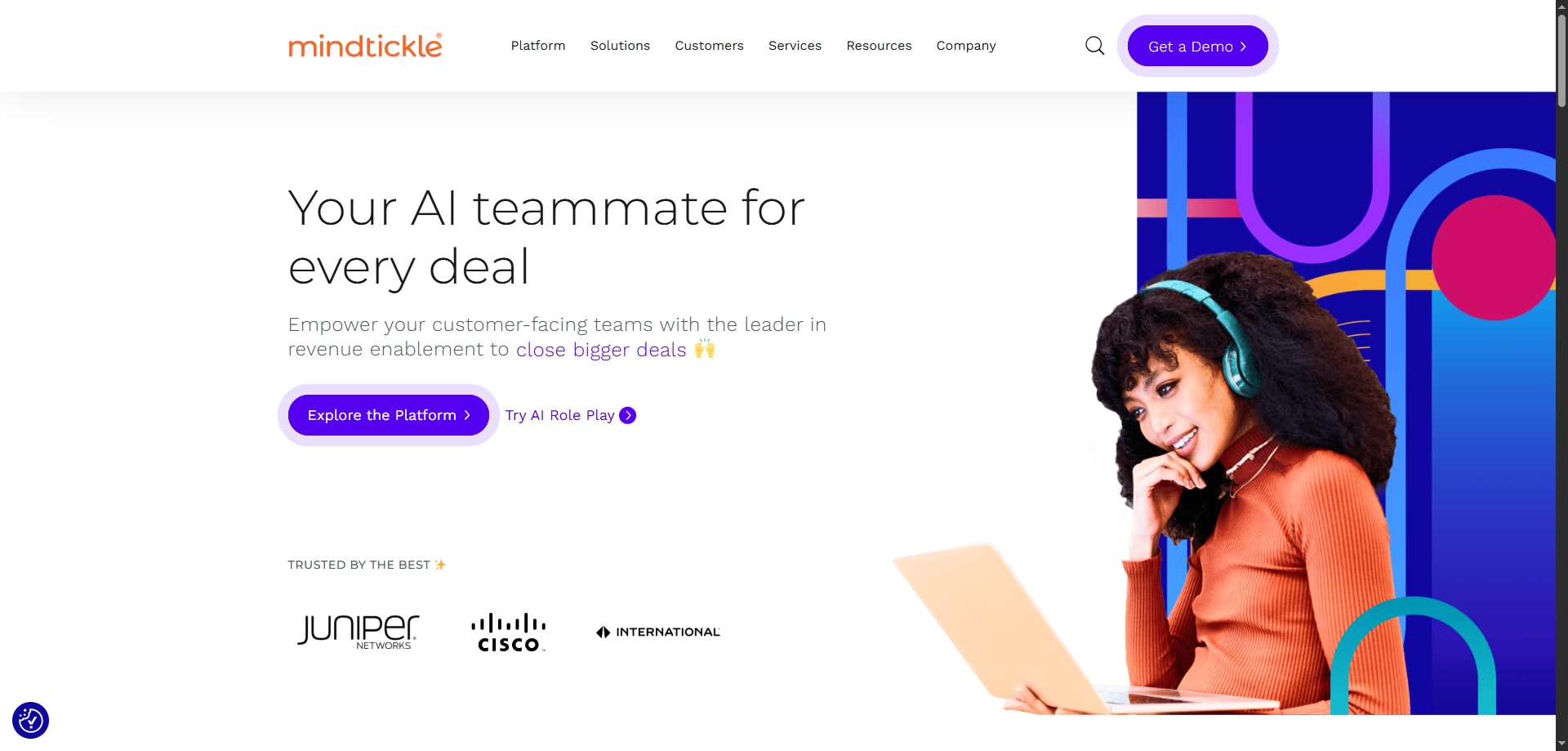
Mindtickle helps sales teams ramp up faster, improve skills, and close more deals. It provides personalized training, AI-driven coaching, and tailored buyer engagement tools to boost sales productivity and shorten deal cycles.
It works by integrating into daily sales workflows, delivering training, coaching, and content in one platform that reps can access anytime to practice and prepare for real customer interactions.
What makes it stand out is its use of AI-powered role-plays and insights that help reps practice pitches realistically and get personalized feedback, speeding learning and improving sales outcomes.
Quick facts:
Pros:
Cons:
Pricing:
No free tier but offers a free trial. Paid plans start at a custom price based on team size and feature needs. Enterprise pricing is tailored for large-scale deployments."
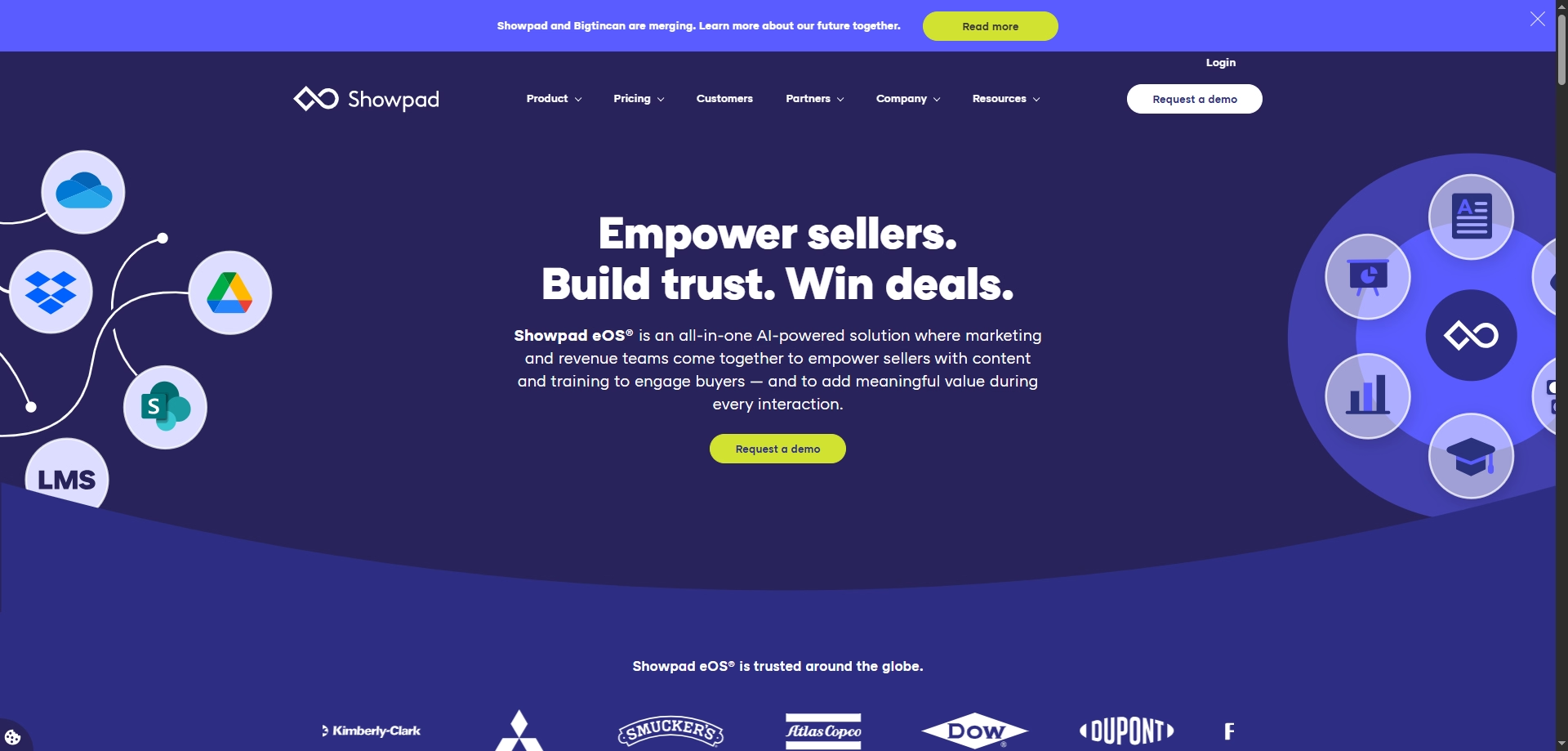
Showpad helps sales teams find, share, and track the best sales content. It boosts seller confidence and speeds up deals by making sure reps always have the right information and training at their fingertips.
It also improves buyer engagement and helps teams work smarter with data insights.
Showpad fits into daily workflows by centralizing sales content, training, and buyer engagement tools in one place. Sellers can quickly access and share materials offline or online, while managers track performance and coach effectively.
Showpad combines content management, coaching, and buyer engagement in one AI-powered platform. Its shared digital spaces and advanced analytics give sellers personalized support and buyers a richer experience, speeding deal cycles.
Quick facts:
Pros:
Cons:
Pricing:
No free tier, but demo and trial available. Paid plans start at a custom quote based on team size and features. Enterprise pricing is tailored for large-scale deployments.
Once your content's in play, you need to know what's landing and what's not. Let's see how to measure what's really working behind the scenes.
Guessing doesn't grow revenue. Analytics tools show you which deals, messages, and channels perform best so you can double down on what drives results.
Here's how the top sales tools compare:
| Tool | Best for | Strength | Setup effort | Ideal ICP | Pricing tier |
|---|---|---|---|---|---|
| Attention | AI sales automation & coaching | Automates CRM updates, follow-ups, and call insights with AI agents | Low | SMB → Enterprise | $$ |
| Clari | Revenue forecasting & pipeline management | Provides real-time, AI-powered revenue visibility and predictive insights | Medium | Mid-Market / Enterprise | $$$ |
| Gong | Conversation analytics & deal insights | Transforms call data into actionable coaching and forecasting intelligence | Medium | Mid-Market / Enterprise | $$$ |
| People.ai | Sales activity & data automation | Captures and analyzes all sales activities to improve forecasting and alignment | Medium | Mid-Market / Enterprise | $$$ |
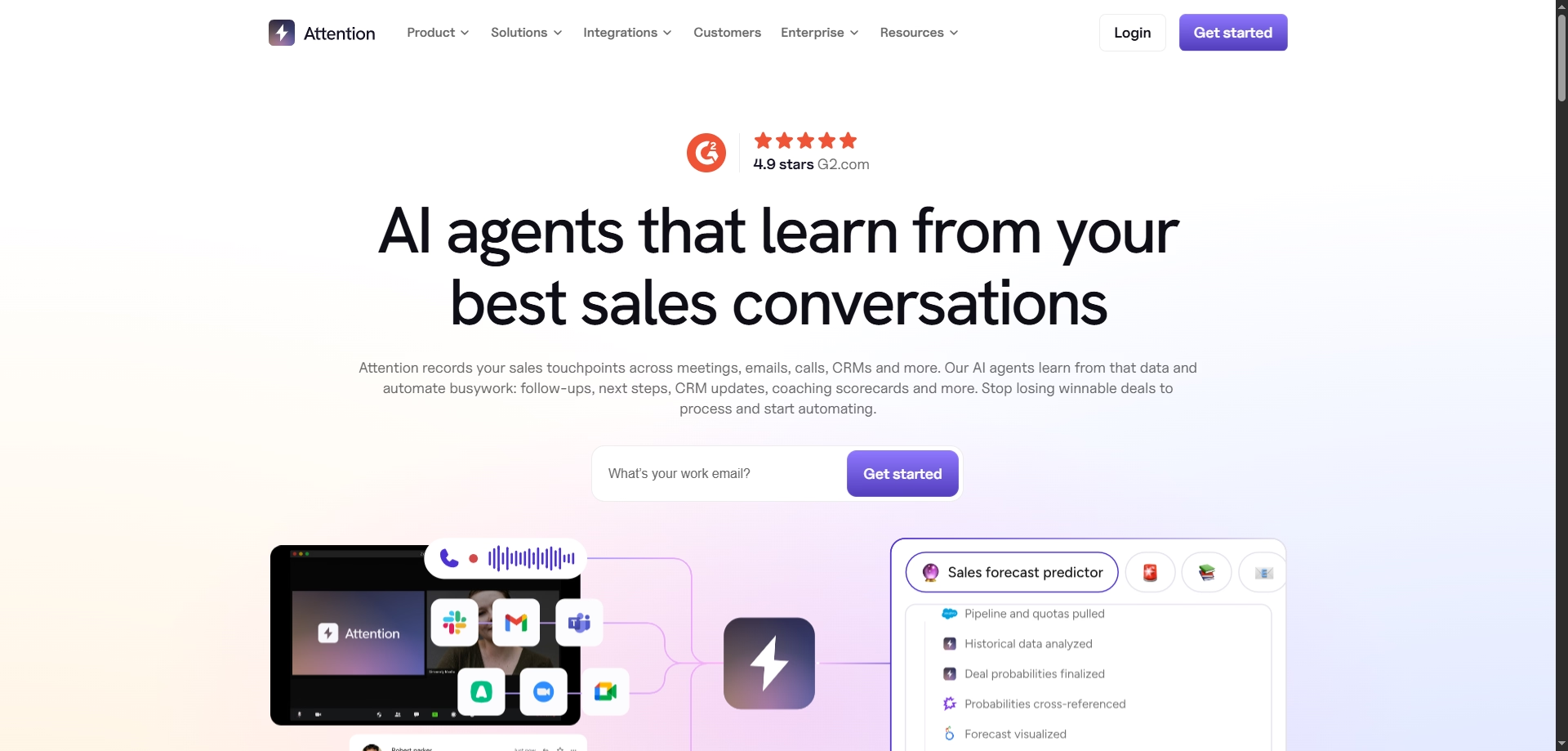
Attention helps sales teams cut down on busywork by automating tasks like updating CRMs, sending follow-ups, and scoring calls. It captures and analyzes your sales calls, emails, and meetings to boost productivity and close deals faster.
It integrates with your existing tools to record and transcribe calls, then uses AI agents to update your CRM, automate follow-ups, and generate coaching insights in real time.
Attention learns directly from your best sales conversations, tailoring automation and coaching to your team's needs.
Its deep integration with over 200 sales tools for B2B makes it easy to fit into any workflow.
Quick facts:
Pros:
Cons:
Pricing:
Free tier available to start. Paid plans begin around $50 per user per month. Enterprise pricing is custom based on volume and features.
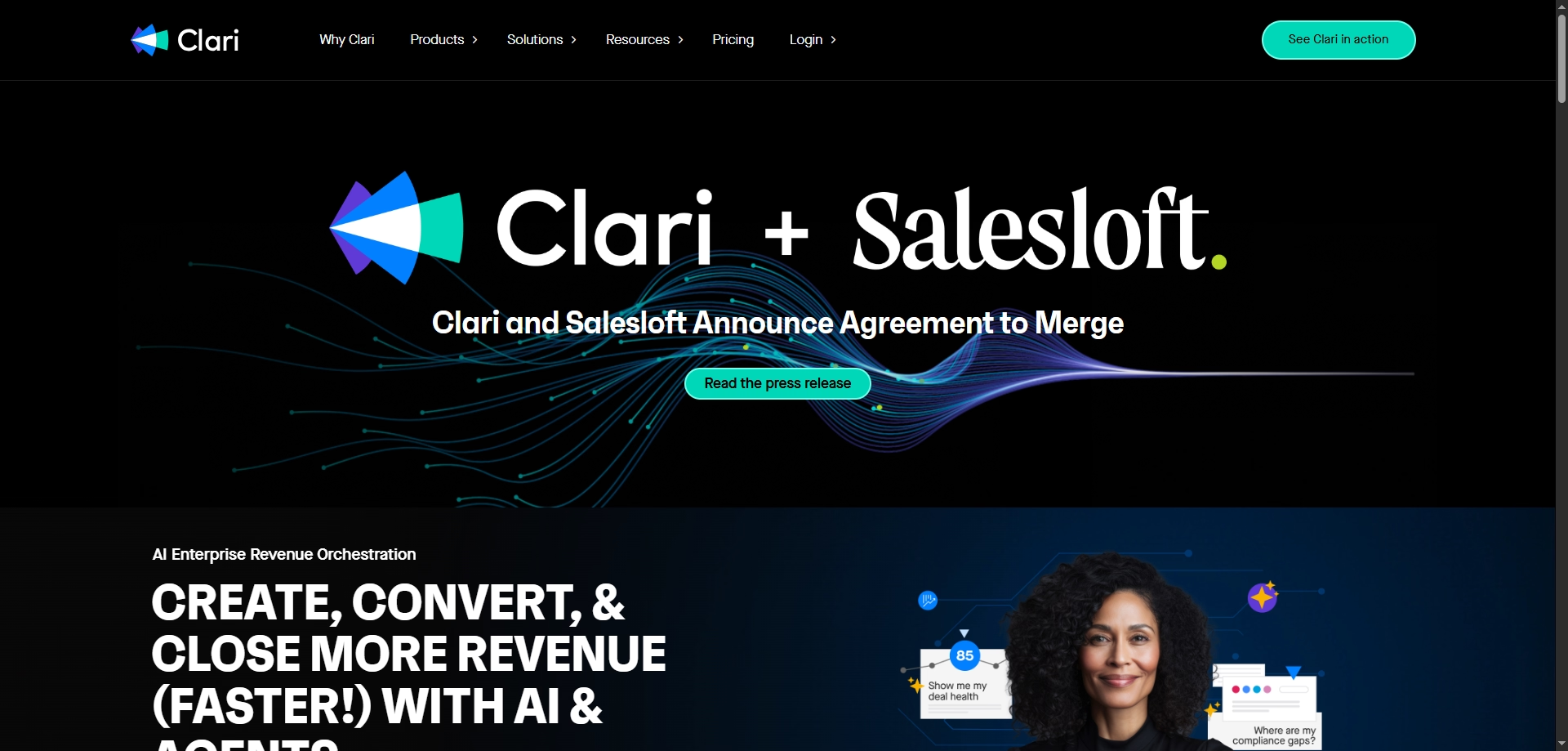
Clari helps sales teams close more deals by providing clear visibility into their pipeline and forecasting.
It uses AI to highlight risks and opportunities, so reps focus on the right actions and managers predict revenue with confidence. It boosts productivity and accuracy, helping teams hit targets faster.
Clari fits into daily sales by automatically capturing data, analyzing deals, and guiding next steps. It creates a single source of truth for pipeline and forecasting in one platform.
Clari stands out because of its AI-driven revenue orchestration that connects all revenue signals in real time. Its predictive insights and automation reduce guesswork, making forecasting more accurate and sales execution more precise.
Quick facts:
Pros:
Cons:
Pricing:
No free tier. Paid plans start at custom pricing based on user count and features. Enterprise pricing is tailored for high-scale teams with advanced needs.
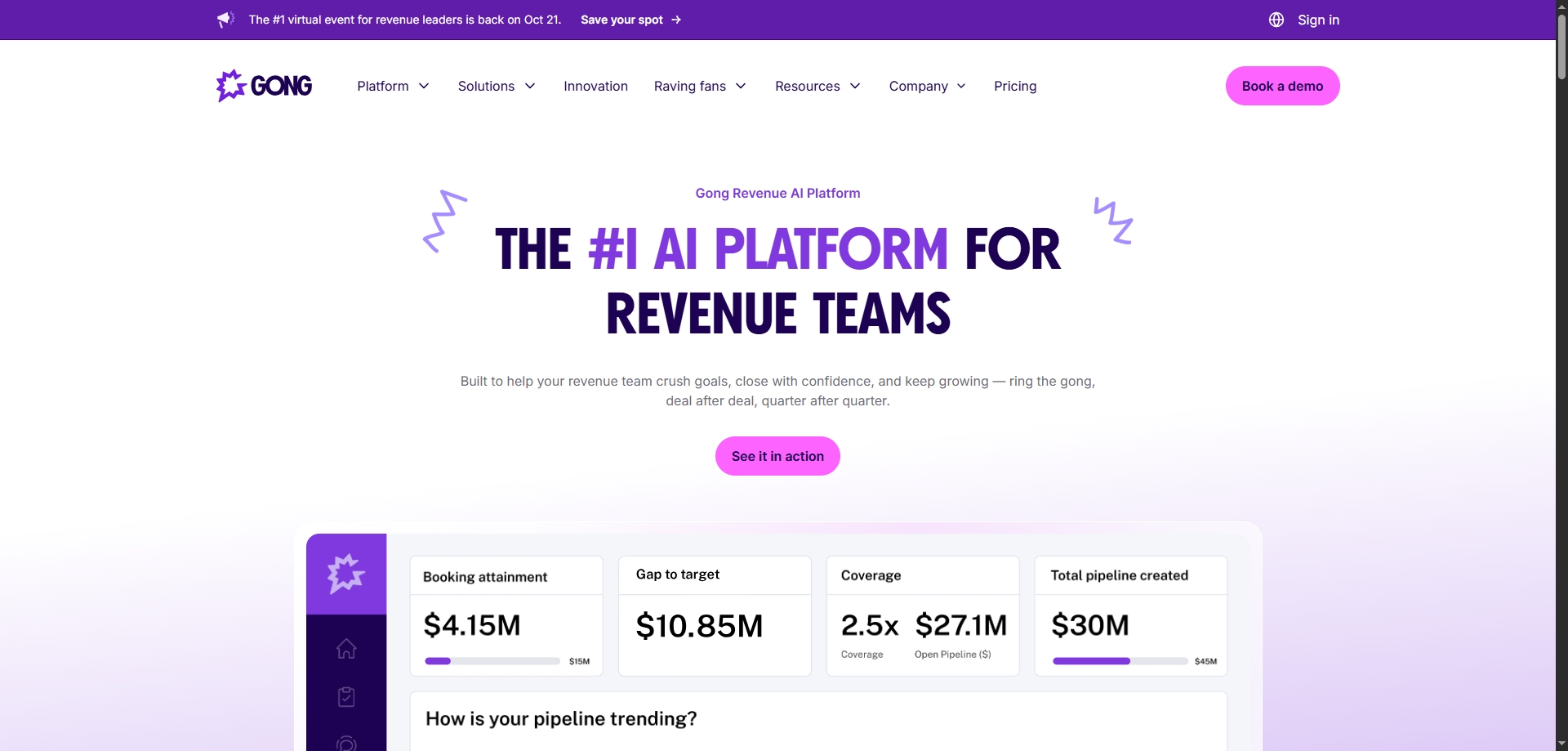
Gong helps sales teams win more deals by capturing and analyzing every customer interaction. It gives clear insights on what works and what doesn't, so teams can improve sales conversations, forecast accurately, and close deals faster.
It turns noisy data into simple, actionable advice that boosts revenue growth consistently.
Gong records calls, emails, and meetings, then uses AI to analyze conversations and sales activities. It fits into daily workflows by delivering insights and alerts directly where reps work, like CRMs and email.
Gong's AI agents automate follow-ups and data updates, saving reps hours on busywork. It offers unmatched visibility into deals by analyzing real customer interactions, not just data entries, making forecasting and coaching smarter and easier.
Quick facts:
Pros:
Cons:
Pricing:
No free tier, but offers a free trial. Paid plans start at several hundred dollars per user per month. Enterprise pricing is custom based on volume and features.
People.ai helps sales teams by automatically capturing and organizing all sales activities into one place. It eliminates manual data entry, improves forecasting accuracy, and gives clear visibility into pipeline and deal health.
This allows sales reps to focus on selling while managers make faster, smarter decisions to close more deals.
It works by integrating with your existing B2B sales tools and tracking activity data across emails, calls, meetings, and CRM updates, syncing everything automatically into a unified dashboard.
What makes it stand out is its AI-powered automation that reduces grunt work and delivers real-time insights tailored to your unique sales process, improving both efficiency and deal outcomes without extra manual effort.
Quick facts:
Pros:
Cons:
Pricing:
No free tier, but free trial available. Paid plans start at custom pricing tailored for mid-market and enterprise companies. Enterprise-level pricing includes full platform access and support.
After you've got the data, it's time to take action. That's where automation steps in, turning insights into time-saving systems that work for you.
Yes! But when it's done right. Automation handles the busywork while you handle the human work: building trust, closing deals, and growing relationships.
Here's how the best sales automation tools compare:
| Tool | Best for | Strength | Setup effort | Ideal ICP | Pricing tier |
|---|---|---|---|---|---|
| Clay | Lead enrichment & workflow automation | Combines 150+ data sources with customizable AI-driven workflows | Medium | SMB → Enterprise | $$ |
| Apify | Web data automation & scraping | Gathers fresh web data at scale with prebuilt scrapers and APIs | Low | SMB → Enterprise | $$ |
| PhantomBuster | Social lead generation | Extracts real-time leads from LinkedIn and social platforms with automation | Low | Solo / SMB / Mid-Market | $ |
| Artisan | AI-powered outbound prospecting | Automates lead research and personalized outreach across channels | Low | SMB → Enterprise | $$ |
| Relevance AI | Custom AI agent automation | Builds no-code AI agents to automate research, follow-ups, and CRM tasks | Low | SMB → Enterprise | $$ |
| n8n | Workflow automation & integration | Connects 500+ apps with visual and code-based automation options | Medium | SMB → Enterprise | $$ |
| Bardeen | Browser-based sales automation | Automates CRM updates and lead sourcing directly in the browser | Low | SMB / Mid-Market / Enterprise | $ |
Clay helps sales teams find accurate and fresh data on leads and accounts. It cleans and enriches CRM info automatically, tracks key signals like job changes, and triggers timely actions.
This boosts sales efficiency by turning raw data into focused outreach that wins more deals.
Clay connects to your CRM and other SaaS sales tools, enriches data from multiple sources, monitors signals continuously, and automates workflows to notify reps or launch campaigns at the right moment.
Clay, as one of the sales tools for startups, combines data from over 150 providers with AI-driven workflows. It lets teams build custom automations easily, enriching and activating leads at scale without heavy IT involvement, saving time and improving accuracy.
Quick facts:
Pros:
Cons:
Powerful features can have a learning curve for non-technical users
May require setup time to tailor workflows to specific GTM processes
Some integrations and advanced automations might need support from Clay experts
Pricing:
Free tier available with limited features. Paid plans start at around $100/month. Enterprise pricing is custom-based on volume and needs.
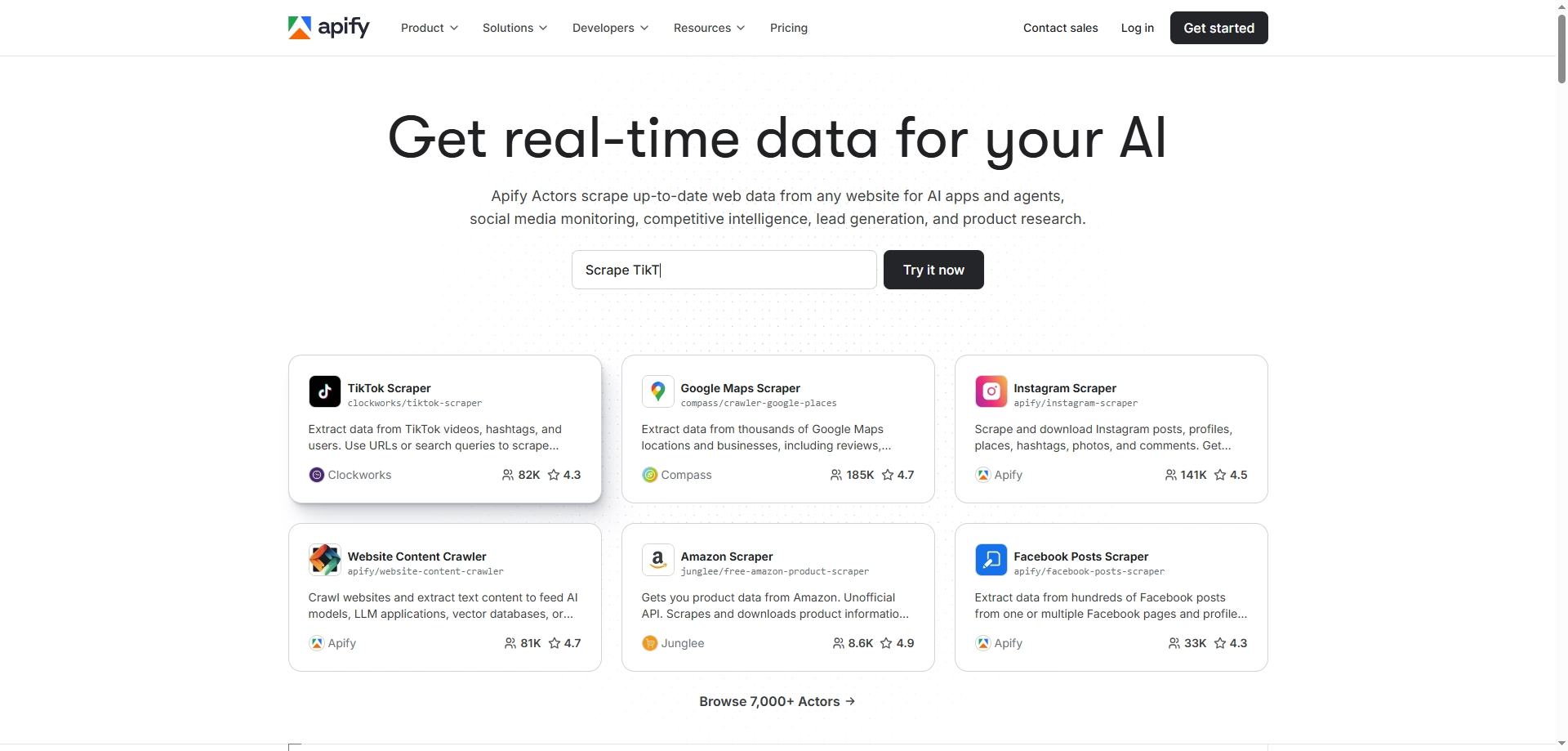
Apify helps sales teams gather up-to-date web data automatically. It enables easy lead generation, market research, and monitoring competitors by scraping websites at scale. This ensures sales teams always have fresh, actionable information without manual work.
Apify fits into daily workflows by letting users run or schedule prebuilt scrapers (called Actors) or create custom ones to pull data directly into their tools or reports.
What makes it stand out is its vast library of ready-to-use scrapers, seamless API access, and reliable infrastructure that handles proxies and anti-blocking to get clean, continuous data effortlessly.
Quick facts:
Pros:
Cons:
Pricing:
Free tier offers $500 in free platform credits to get started. Paid plans start from $49/month based on usage credits. Enterprise pricing is custom for large-scale requirements.
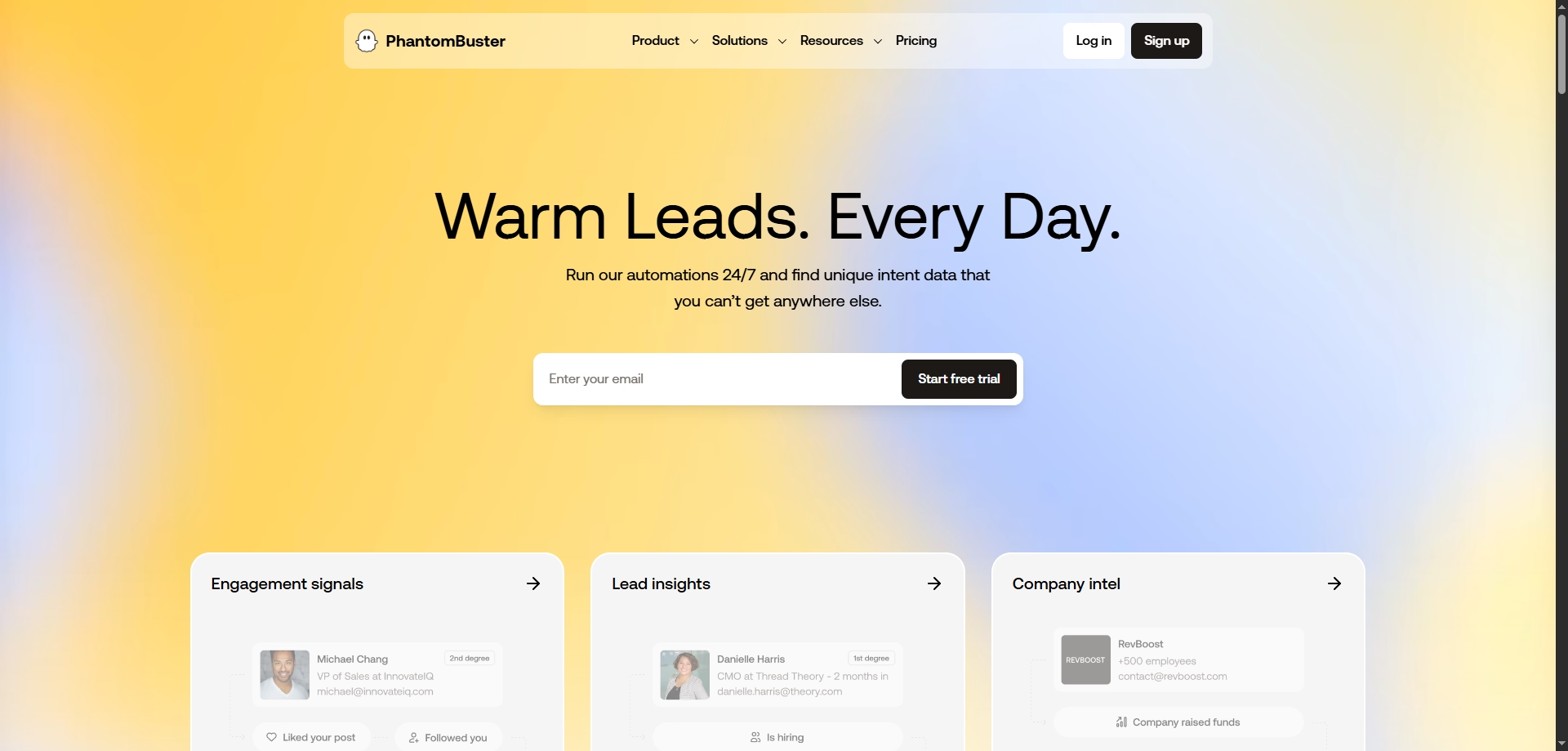
PhantomBuster helps sales teams find fresh, real-time leads from social platforms like LinkedIn, Twitter, and Instagram.
It uncovers warm prospects by extracting live data and engagement signals, enabling smarter outreach with personalized messages that boost response rates and pipeline growth.
It works by running automated workflows that gather and update lead information continuously, fitting seamlessly into daily prospecting routines to keep pipelines full with relevant contacts.
What makes it stand out is its ability to pull live, real-time data across 15+ platforms and enrich leads with over 1,000 data points. It sends personalized LinkedIn outreach automatically while staying compliant with platform rules.
Quick facts:
Pros:
Cons:
Pricing:
Offers a free tier with limited credits to test features. Paid plans start at around $30/month or per credit use. Enterprise pricing is available for large teams needing high-volume automation.
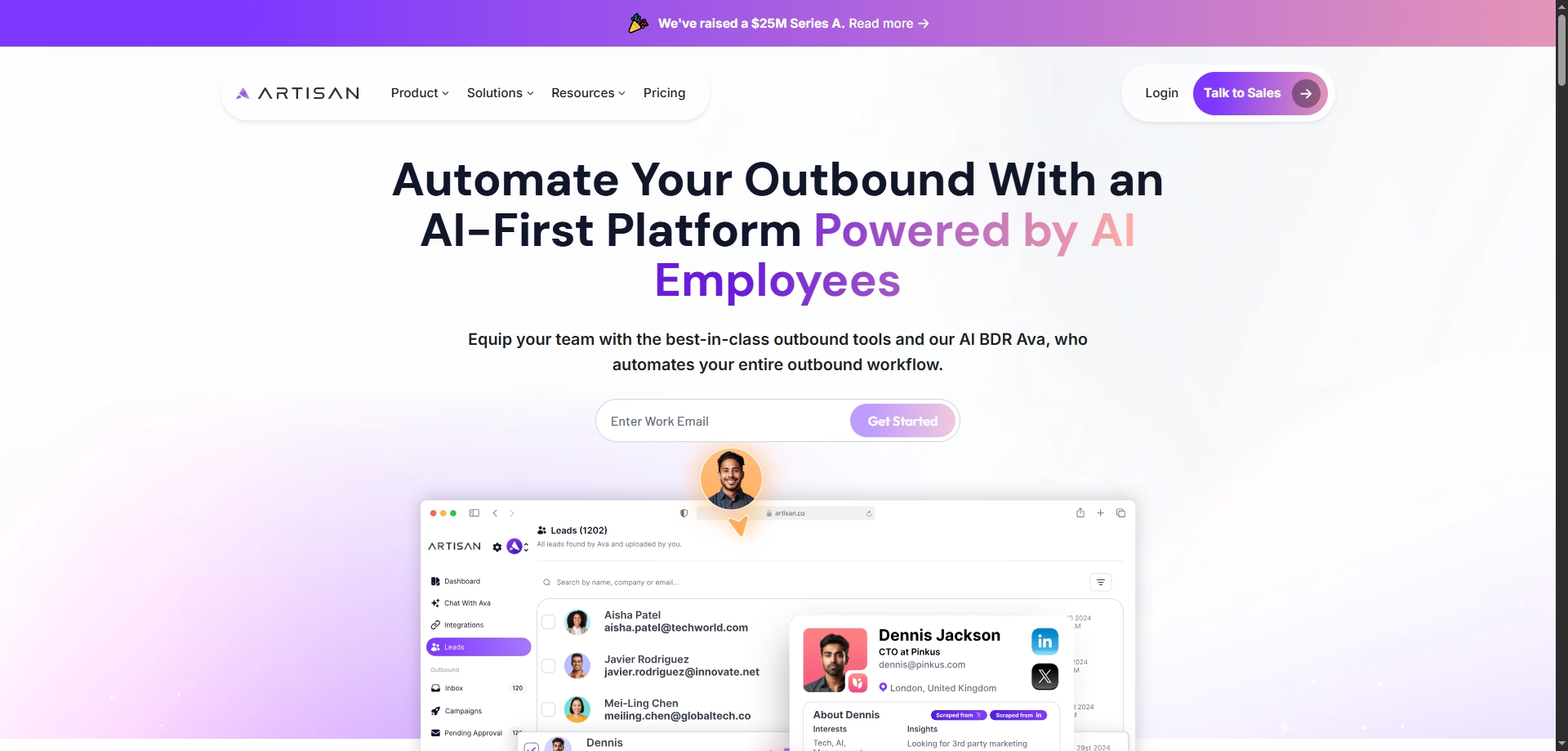
Artisan is an AI-powered sales assistant that automates outbound prospecting. It finds and researches leads, personalizes outreach messages, and manages email and LinkedIn sequences. This helps sales teams save time and focus on closing deals instead of routine tasks.
Artisan integrates into daily workflows by automatically identifying leads, crafting tailored messages, and scheduling follow-ups to keep pipelines active without manual effort.
Artisan's AI handles the entire outbound cycle from lead sourcing to personalized messaging, boosting conversion rates with intent-based timing and rich prospect insights, unlike sales tools for B2B that focus on only parts of the workflow.
Quick facts:
Pros:
Cons:
Pricing:
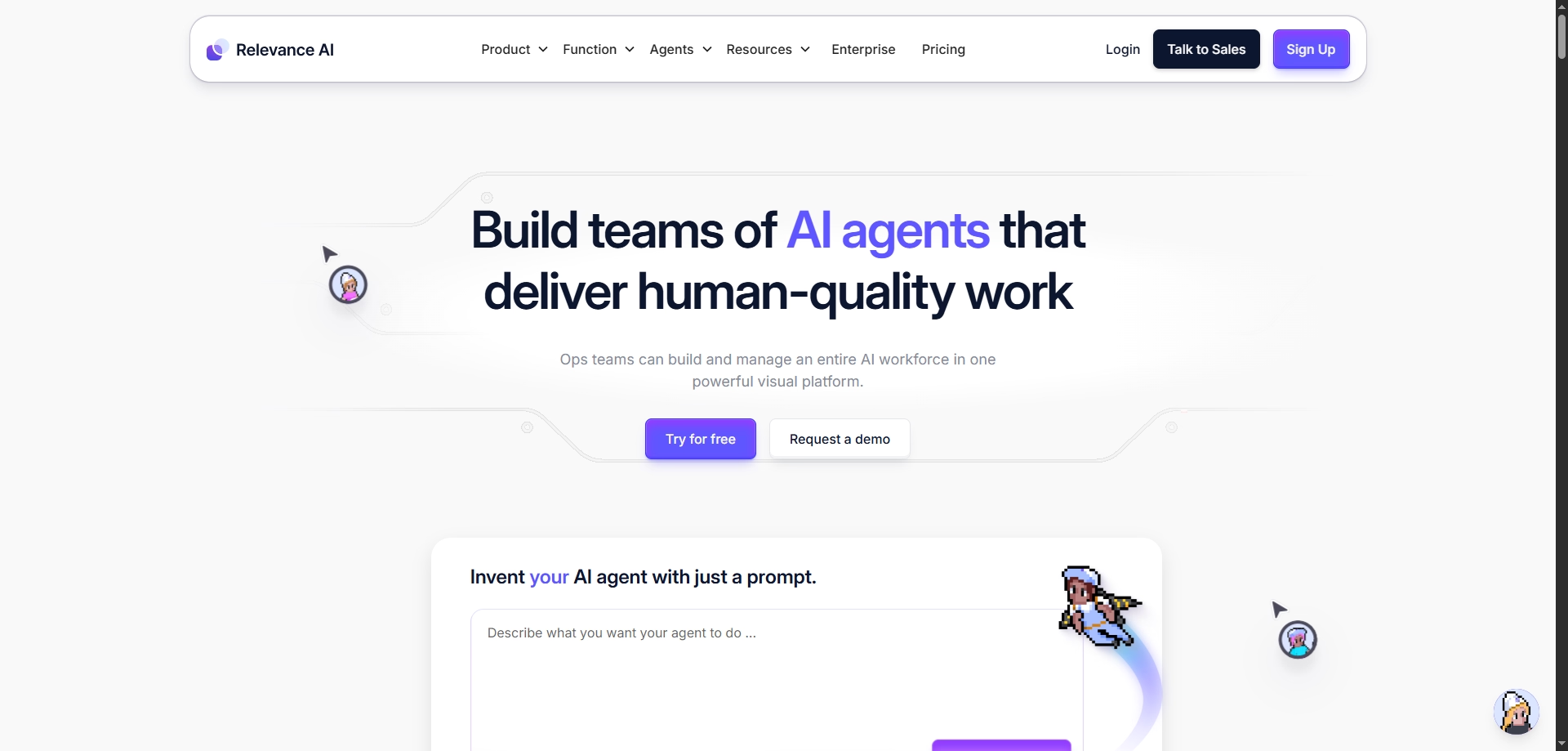
Relevance AI helps sales teams automate routine tasks and scale their efforts by building custom AI agents that work like human team members. It frees reps from research, follow-ups, and data entry so they can focus on selling more and faster.
The tool also enables real-time CRM enrichment and instant lead qualification, boosting pipeline and meeting rates without extra effort.
Relevance AI fits into daily workflows by letting teams create and deploy AI agents through a simple, no-code platform. Agents handle things like meeting bookings, account research, and inbox management automatically, working alongside salespeople to keep deals moving.
What makes it stand out is its flexibility to build fully custom AI agents without coding, matched to your exact sales processes. It offers a visual platform to manage an entire AI workforce, integrating with top LLMs and popular business apps.
The ability to quickly tweak and scale agents delivers human-level work quality at machine speed.
Quick facts:
Pros:
Cons:
Pricing:
Offers a free plan with limited access. Paid plans start at a monthly fee based on usage and features. Enterprise options have custom pricing to support large-scale AI workforces."
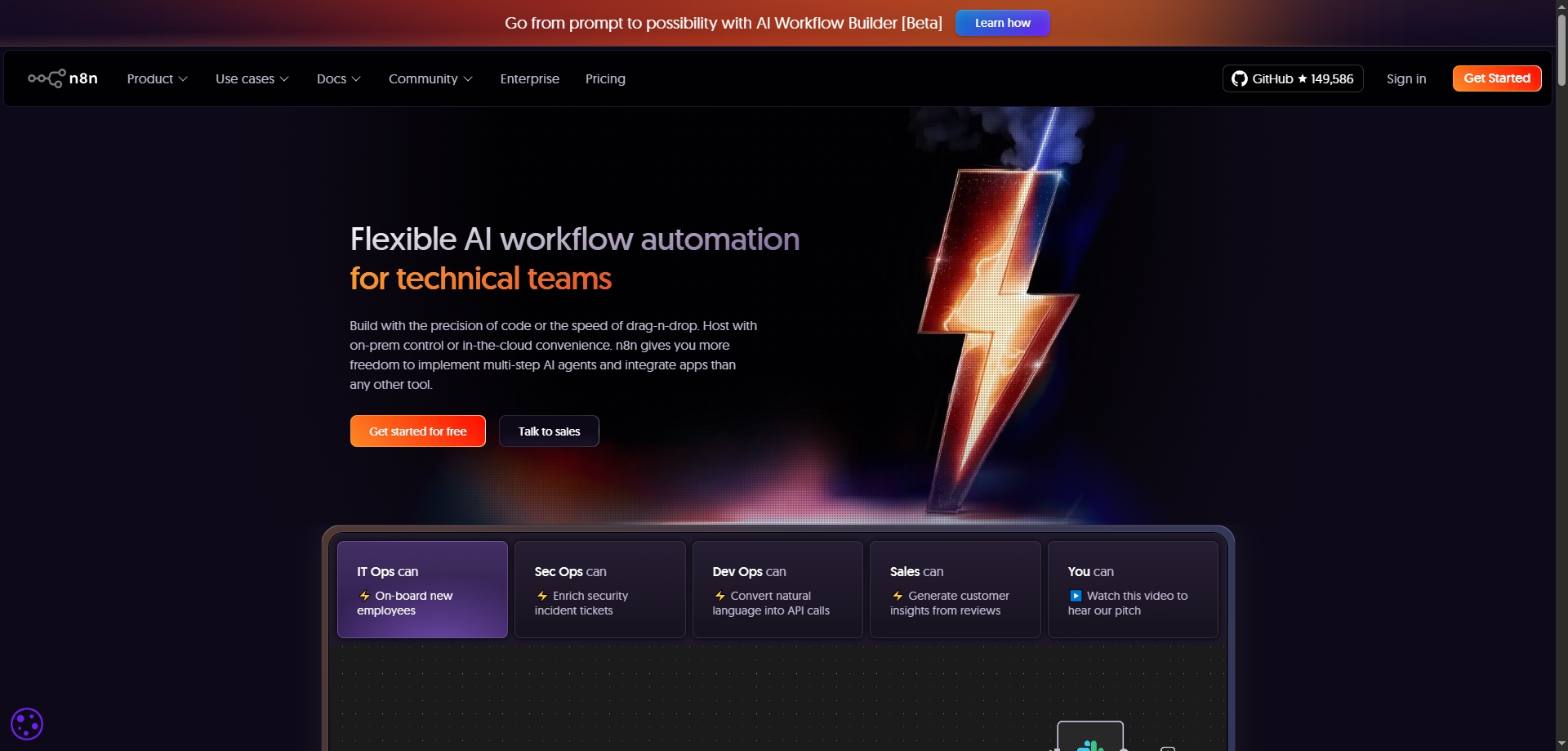
One of the free sales tools (with some headaches to deploy, but still), n8n is a workflow automation tool that helps sales teams save time by automating repetitive tasks and connecting multiple apps. It enables building multi-step processes that gather customer insights, manage leads, and streamline sales operations without manual effort.
It works by letting users create automated workflows visually or with code, integrating various apps to trigger actions and move data throughout the sales process.
What makes it stand out is its flexibility and power. It supports both drag-and-drop and coding, offers full control to host workflows on-premises or cloud, and integrates with over 500 apps, making complex automations possible and customizable.
Quick facts:
Pros:
Cons:
Pricing:
Offers a free tier with basic features. Paid plans start at $20/month with higher limits and priority support. Enterprise plans offer custom pricing for large-scale deployments.
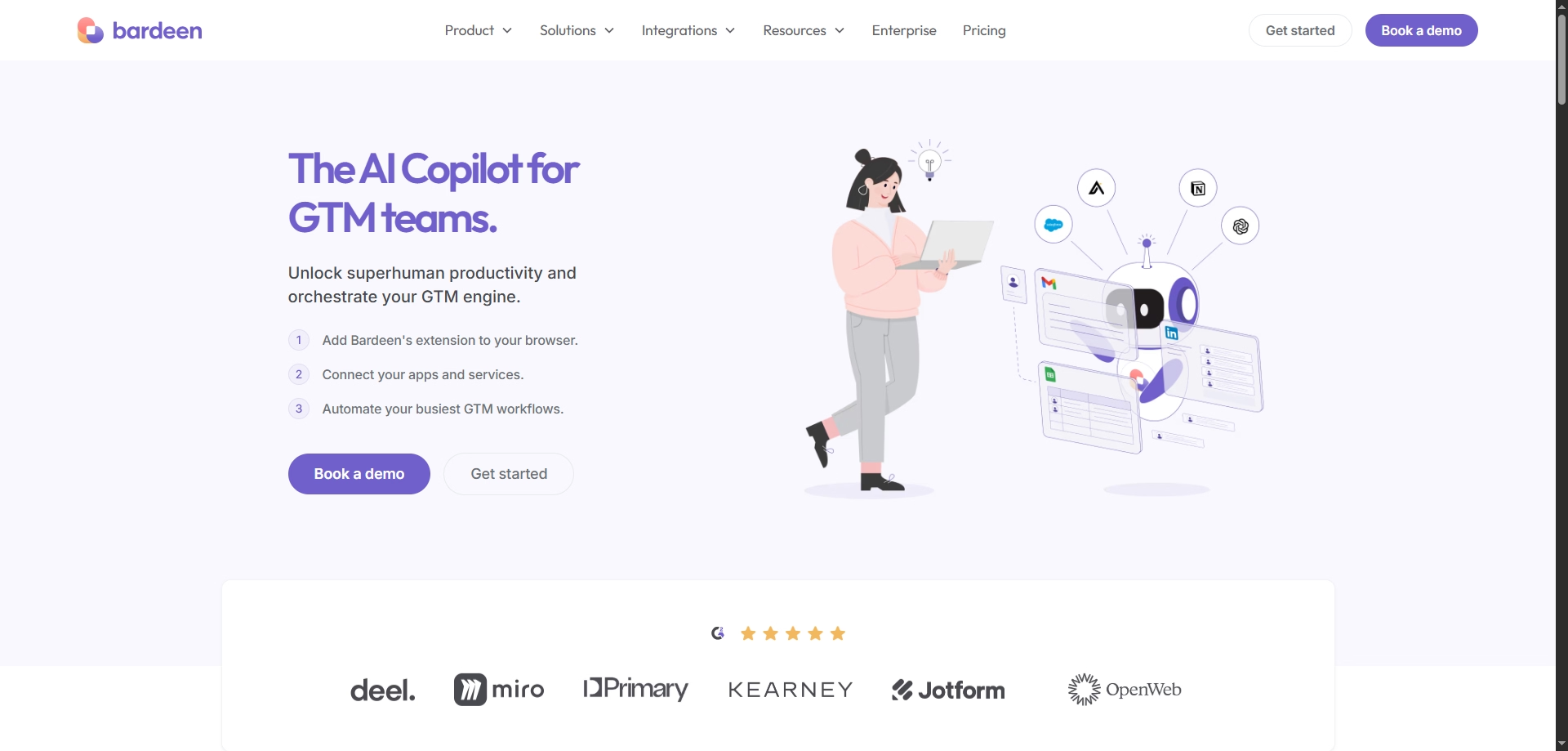
Bardeen helps sales and GTM teams automate repetitive tasks like lead discovery, CRM updates, and follow-ups. It saves time and reduces manual work so teams can focus on closing deals and building relationships.
It works by connecting to the apps and tools your team already uses, then automating workflows directly in your browser with no coding needed.
What makes it stand out is its simple, no-code setup and AI-powered automation that learns your team's workflows to boost productivity without adding tool complexity.
Quick facts:
Pros:
Cons:
Pricing:
Free tier available with basic automations. Paid plans start at affordable monthly rates. Custom pricing for large enterprise teams with advanced needs.
Automation is great, but connection still matters most. Let's talk about how to communicate with prospects in ways that feel more human, and close more deals.
Every conversation matters. These tools make meetings smoother, notes clearer, and follow-ups effortless, so you sound polished and stay present.
Here's how these best B2B sales tools compare:
| Tool | Best for | Strength | Setup effort | Ideal ICP | Pricing tier |
|---|---|---|---|---|---|
| Chorus | Call analysis & coaching | Analyzes sales calls and emails to reveal what drives wins and improve coaching | Low | Mid-Market / Enterprise | $$ |
| Default | Inbound lead routing & scheduling | Automates lead qualification, routing, and demo booking in one platform | Medium | SMB → Enterprise | $$ |
| Chili Piper | Instant lead conversion | Instantly qualifies, routes, and books meetings from any channel | Low | Mid-Market / Enterprise | $$ |
| Avoma | AI meeting notes & coaching | Automates notes, follow-ups, and coaching with built-in conversation intelligence | Low | SMB → Enterprise | $$ |
| Fireflies.ai | Meeting transcription & summaries | Records, transcribes, and summarizes meetings automatically with AI | Low | SMB → Enterprise | $ |
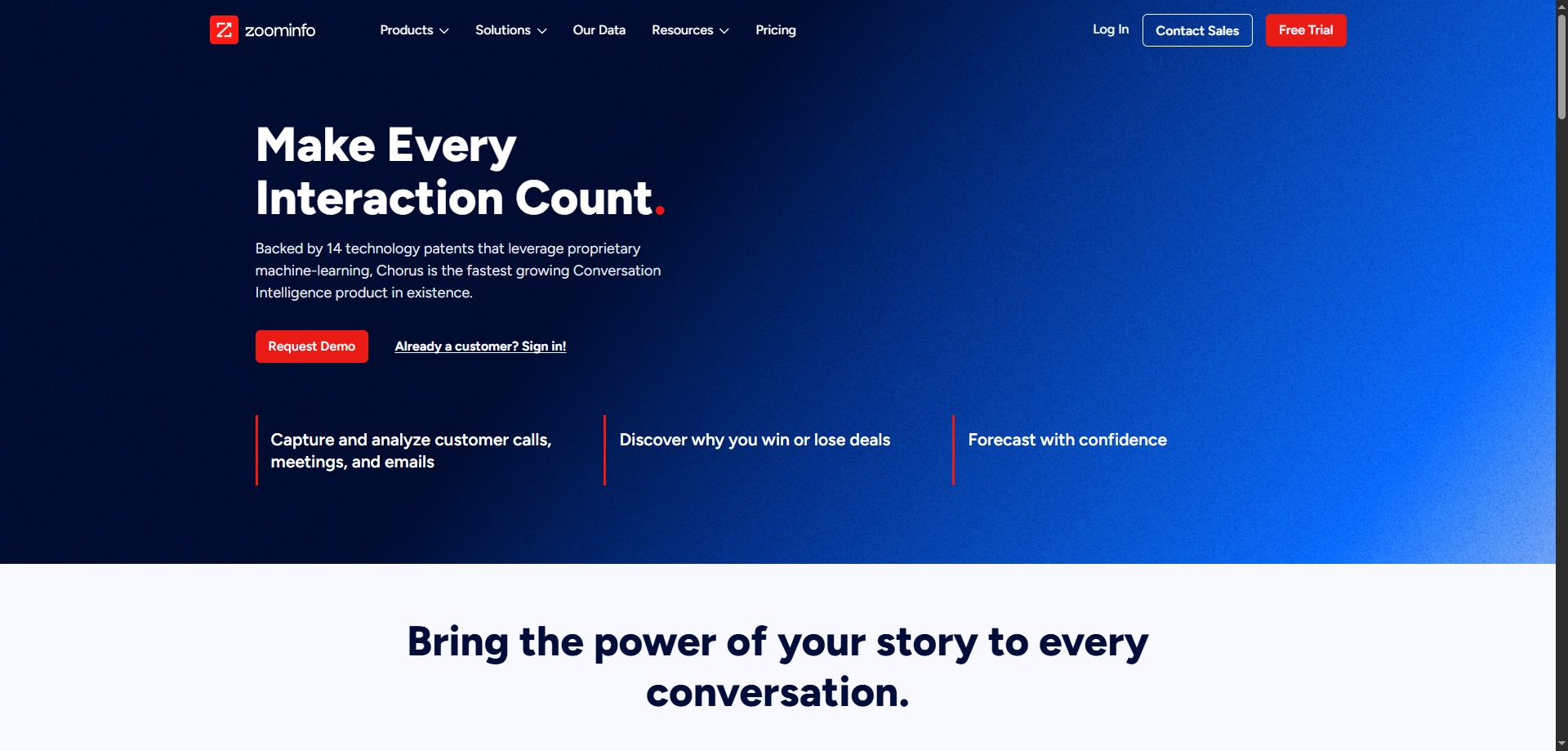
Chorus records and analyzes sales calls, meetings, and emails to help sales teams understand what drives wins and losses. It uncovers key insights that improve coaching, shorten sales cycles, and increase deal close rates.
It works by automatically capturing conversations, transcribing them, and providing actionable insights directly within the sales workflow.
What makes it stand out is its ability to combine conversation intelligence with AI-driven analytics to pinpoint winning behaviors and forecast deal momentum more accurately than traditional online sales tools.
Quick facts:
Pros:
Cons:
Pricing:
No free tier but offers a free trial. Paid plans start around $100/month per user. Enterprise pricing is custom based on volume and features.
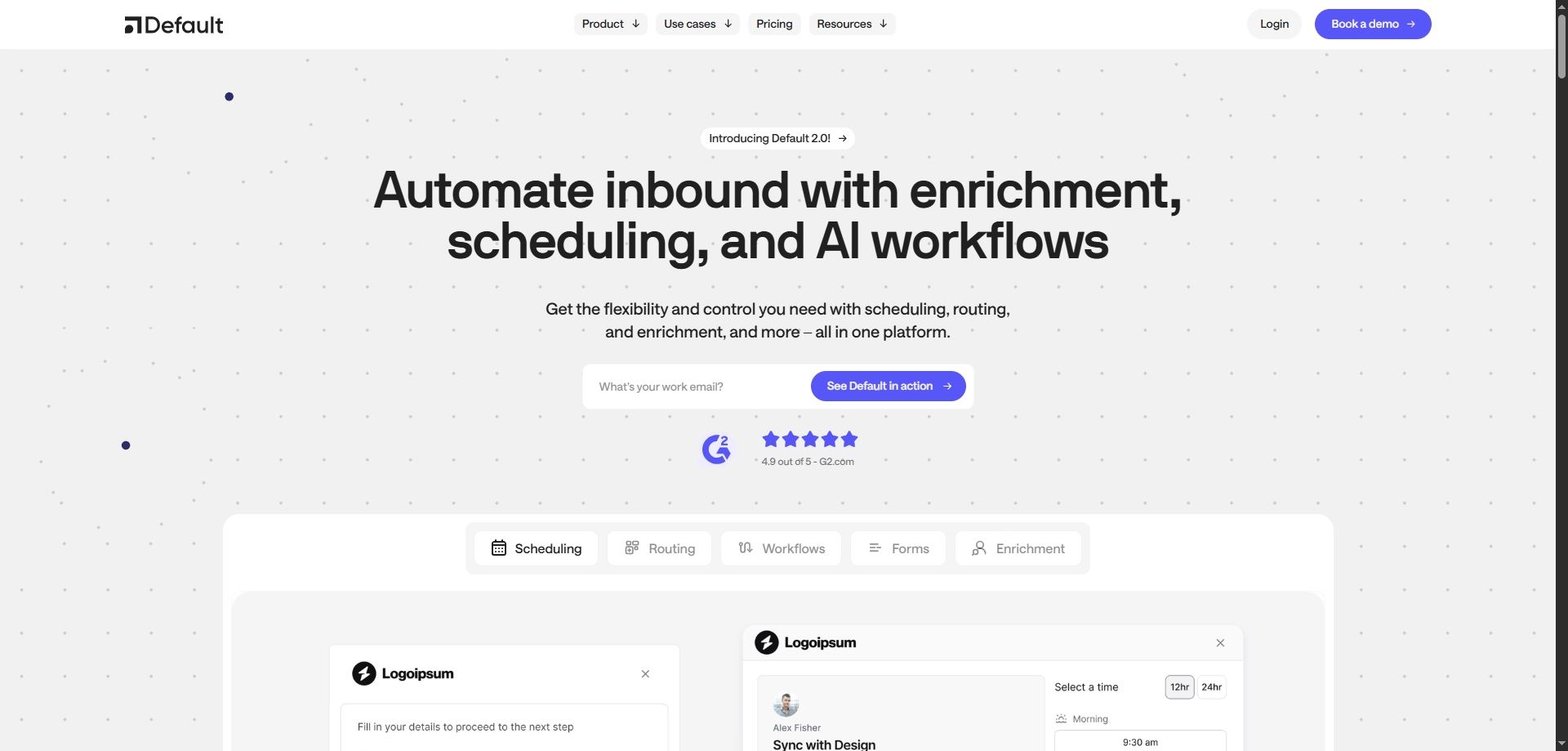
Default helps sales teams automate inbound lead handling by routing leads, scheduling meetings, enriching data, and cleaning CRM records. It speeds up lead response, improves qualification, and increases the number of booked demos to grow sales pipeline efficiently.
Default integrates with your CRM and calendar. When a lead submits a form, it enriches and qualifies the lead, routes it to the right rep, shows their calendar for scheduling, then updates CRM and notifies the team.
Default combines routing, scheduling, enrichment, and workflows in one platform. It gives full control to sales and RevOps teams without needing engineers, making it faster and simpler to handle inbound leads with less manual work.
Quick facts:
Pros:
Cons:
Pricing:
Free tier available with limited access. Paid plans start around $50/month per user, scaling with features and volume. Enterprise pricing is custom based on usage and integration needs.
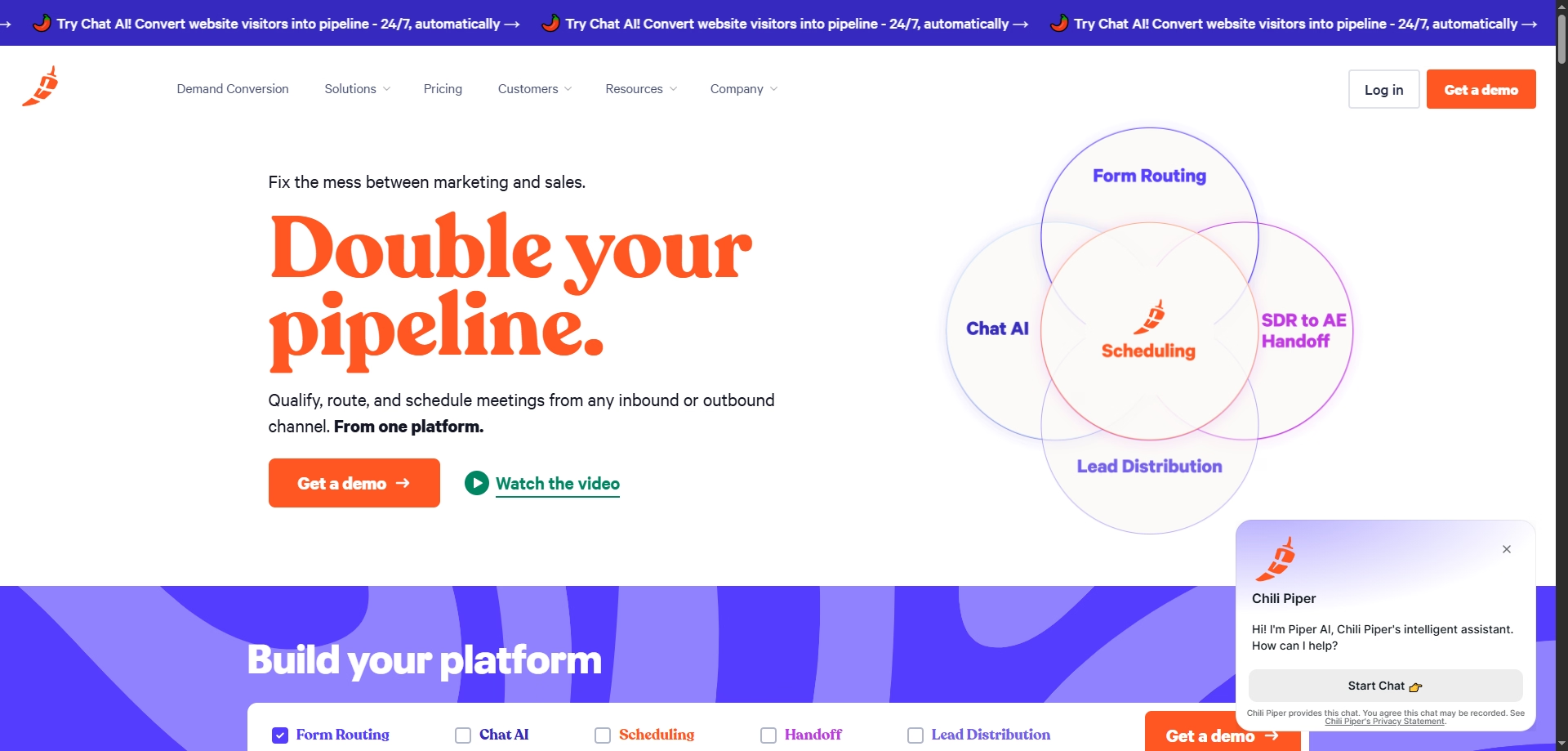
Chili Piper helps sales teams convert more leads by instantly qualifying, routing, and scheduling meetings from any channel. It reduces delays and missed opportunities, turning prospects into booked meetings quickly and efficiently.
This accelerates pipeline creation and improves overall sales performance.
It works by integrating with your existing CRM and marketing tools to automate lead assignment and meeting booking directly from web forms, chats, emails, and more.
What makes it stand out is its all-in-one platform that combines lead routing, chat AI, and scheduling with built-in SLA management, minimizing manual tasks and maximizing conversion speed across teams.
Quick facts:
Pros:
Cons:
Pricing:
No free tier, but offers free trial. Paid plans start around $15 per user/month. Enterprise pricing is customized based on volume and features.
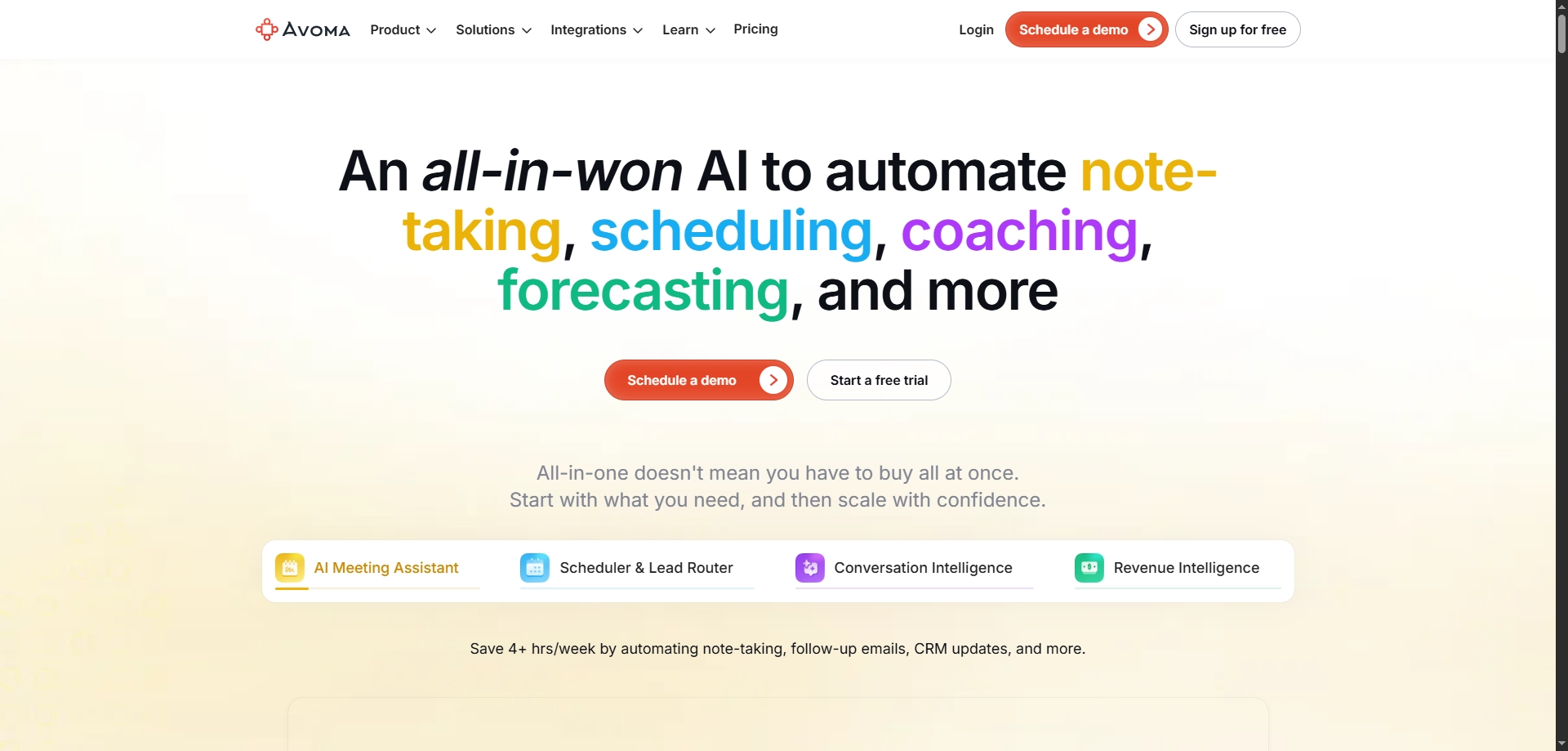
Avoma helps sales teams save time by automating meeting notes, follow-ups, and CRM updates. It makes every conversation productive with AI-driven insights, coaching, and accurate call analysis to close deals faster.
It fits seamlessly into daily workflows by recording meetings, transcribing talks, and generating action items automatically. Sales reps get real-time help and post-call summaries without extra work.
What makes Avoma stand out is its all-in-one platform that combines note-taking, scheduling, conversation intelligence, and revenue forecasting in one place. It grows with your team without complex setups or multiple tools.
Quick facts:
Pros:
Cons:
Pricing:
Free tier available with view-only seats. Paid plans start at $19 per user/month, billed annually. Conversation Intelligence add-on costs $29 per user/month. Enterprise pricing available on request.
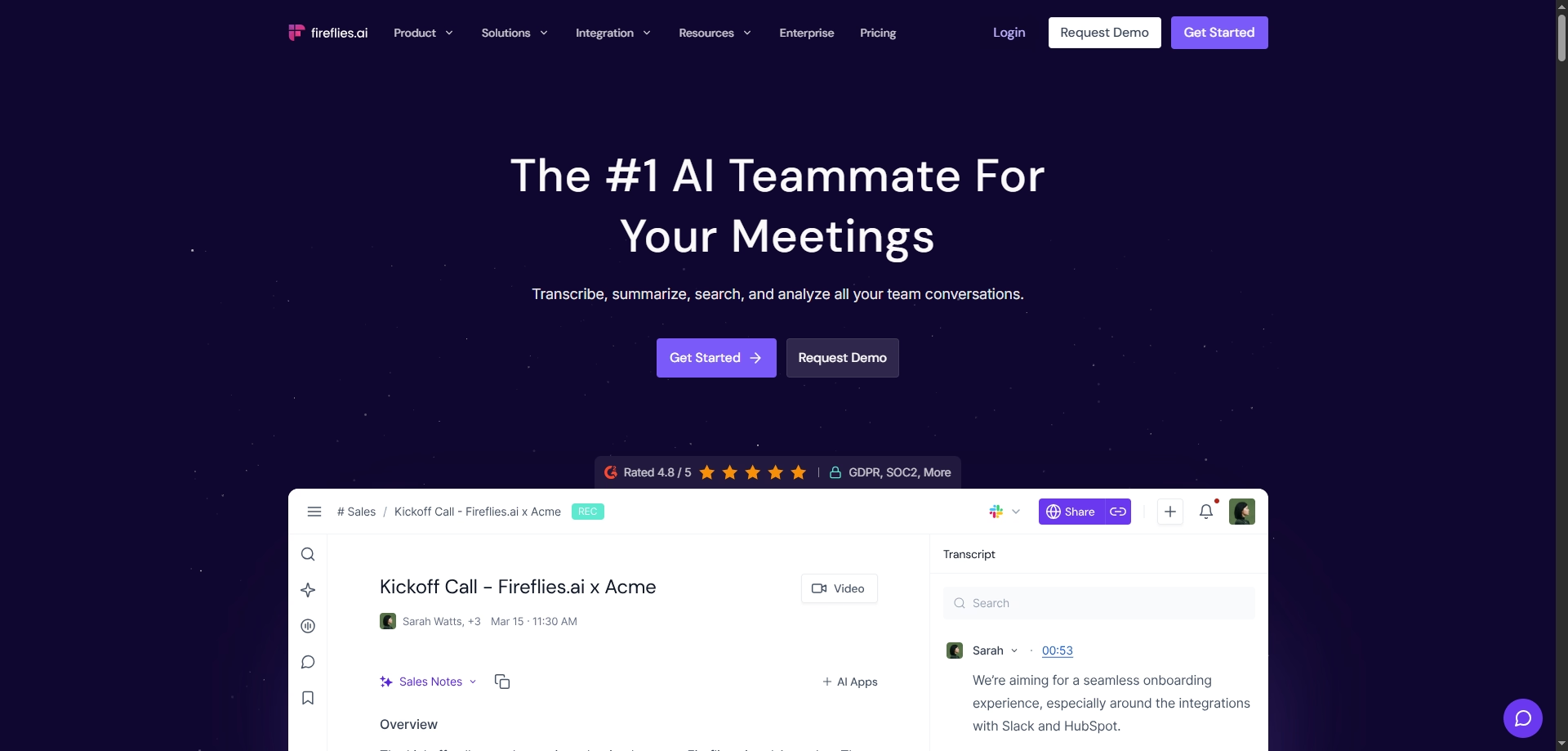
Fireflies records and transcribes sales meetings automatically. It creates clear summaries and highlights action items so sales teams can focus on conversations, not note-taking. This boosts follow-up speed and accuracy.
You add Fireflies.ai to your meetings or calendar. It joins calls to capture and transcribe everything in real time. After meetings, it sends searchable transcripts and summaries to your inbox or CRM.
Fireflies.ai stands out by delivering highly accurate transcripts with speaker recognition and language detection. Its AI-powered search lets teams find past meeting details instantly.
It integrates deeply with many sales tools for automated workflow updates.
Quick facts:
Pros:
Cons:
Pricing:
Free tier available with basic transcription and limited integrations. Paid plans start at $10/month for expanded meeting minutes and advanced features. Custom enterprise pricing for large teams and volume.
Now that you've seen the key areas tools can improve from our list of sales software, the big question is: how do you choose the right mix for your team? Let's build your perfect stack.
With so many shiny tools out there in our list of sales software, it's tempting to grab whatever promises quick results. But the truth is, the best sales stack isn't about having more tools. It's about having the right ones that actually fit how your team sells.
Let's walk through how to build that the smart way.
Before you add anything new, map out how your team currently sells, from finding leads to closing deals.
Ask simple questions:
You'll quickly spot the bottlenecks. Maybe your reps spend hours logging data, or follow-ups keep slipping. Those pain points are your clues for what kind of tool you truly need.
It's easy to overspend on software that looks good in a demo but never gets used. So focus on three things:
The smoother everything connects, the less manual work your team does later.
A tool only works if your team uses it. Before rolling anything out, involve your sales reps in the decision. Ask for feedback, let them test it, and show how it'll make their day easier, not harder. When they feel ownership, adoption happens naturally.
Once you launch, give it a real-world trial. Track how it affects speed, accuracy, and deal flow. If it saves time or improves conversion, great – keep it. If not, tweak or replace it.
Choosing your sales stack isn't a one-time project. It's an ongoing process of improvement. The right mix of tools should feel like a power-up, not extra work. When everything clicks, your sales process runs smoother, your team feels lighter, and results follow naturally.
Before you hit "buy," it's worth knowing what not to do. Here are a few common mistakes that can ruin even the best tool setup.
Even the best tools can flop if you use them the wrong way. The goal isn't just to have great software. It's to make it actually work for you.
Here are a few common traps to watch out for (and how to dodge them).
It's easy to get caught up in new tools that promise "AI magic" or "instant sales." But every new app adds complexity. Before jumping in, ask: Does this solve a real problem I have right now?
If the answer's no, skip it. Focus on improving your core systems instead of chasing the next big thing.
A powerful tool is useless if your team doesn't know how to use it. Take time to walk them through real scenarios, not just features.
Show them how it saves time, simplifies tasks, and helps close deals faster. When people see personal benefits, they actually use the tool.
If your online sales tools don't "talk" to each other, you'll waste hours jumping between systems and miss important insights.
Integrate your tools so data flows automatically between your CRM, email, and analytics platforms. One connected system beats five scattered ones.
Avoiding these mistakes isn't about perfection. It's about alignment. When your tools, team, and data work together, everything feels smoother. You'll sell faster, collaborate better, and finally get the edge you've been chasing.
Avoiding those pitfalls sets you up for long-term success. So, what's next? Let's peek into the future of B2B sales tools and how they'll change the way you sell.
Sales tools are evolving faster than ever and 2025 is shaping up to be a turning point. The biggest shift? Sales is becoming more intelligent, predictive, and personalized than ever before.
You'll see sales tools online that don't just track data but actually think with you, predicting which leads are ready to buy, writing smart follow-ups, and suggesting your next move. Instead of reacting to data, you'll act on insights before the competition even sees them.
The days of generic pitches are over. Modern & best sales tools pull customer signals from every touchpoint (email, calls, even social media) to tailor every message and offer. You'll spend less time guessing and more time connecting.
Buyers now expect instant, natural conversations, not robotic scripts. Chatbots, voice AI, and automation are blending into real-time human workflows. The best reps will use these tools to scale authenticity, not replace it.
So, what does this mean for you?
The future isn't about piling on more software. It's about building a smart, connected stack that feels seamless. Each tool should talk to the others, share data, and support how your team actually sells.
When your stack is connected and your tools are intelligent, sales stops feeling like chasing and starts feeling like flow. That's your unfair edge in 2025.









































































































































































































































































































































































![Collective[i]](https://ib8nrja70n2lsqtp.public.blob.vercel-storage.com/production/products-collectivei-image-yqiKWInsaETHB3egfK2Iqf7s9MRHSN.avif)